
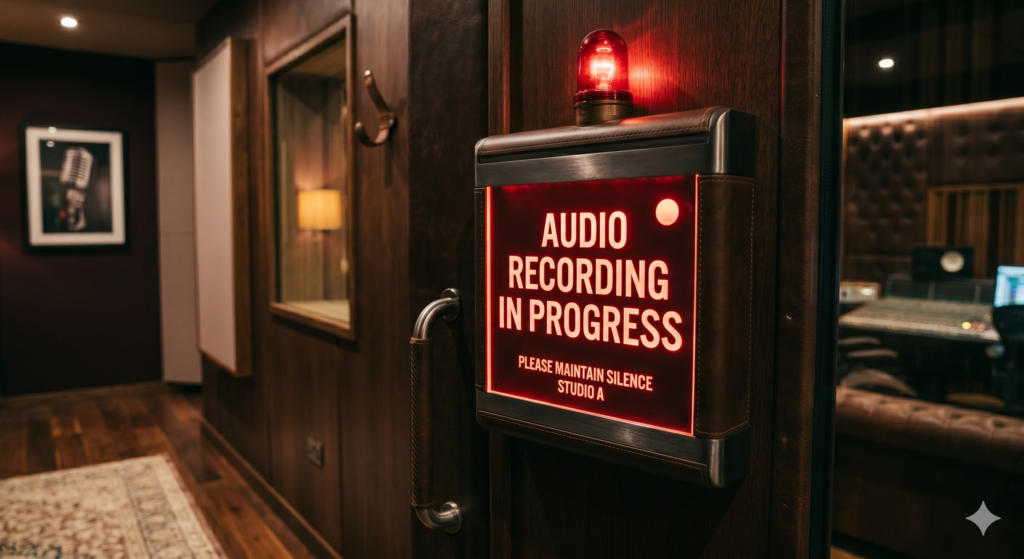
True crime podcasts have captivated millions with their serialized storytelling and cliffhanger episodes. Yet, true crime audiobooks possess a unique power that often eclipses podcast narratives. They offer deeper immersion, richer context, and a more nuanced listening experience that engages both heart and intellect. As a senior audio producer and literary critic, I find that audiobooks combine storytelling artistry with sophisticated audio production, creating a layered experience beyond episodic podcast formats. This article explores why true crime audiobooks provide greater depth, examining their narrative structure, production quality, and emotional resonance.
Why True Crime Audiobooks Surpass Podcast Storytelling
Narrative Complexity and Depth of Research
True crime audiobooks generally present a more comprehensive exploration of cases than podcasts. While many podcasts focus on a single angle or a limited timeline, audiobooks often weave extensive background information, legal analysis, and personal testimonies into one coherent narrative. This allows authors to unpack complex details with greater clarity and depth. The extended format encourages thorough storytelling, enabling listeners to understand motives, societal contexts, and psychological dimensions often glossed over in podcast episodes.
Additionally, audiobooks benefit from the author’s singular vision, providing a cohesive and carefully curated journey. Podcasts frequently rely on multiple hosts, guest interviews, or evolving storylines influenced by real-time developments. This can fragment the narrative or result in uneven pacing. In contrast, true crime audiobooks maintain deliberate storytelling arcs, reflecting meticulous research and editorial control. This structured approach enhances retention and allows listeners to absorb nuanced information without distraction.
The literary foundation of many true crime audiobooks also elevates their quality. These works often stem from journalists or historians who have spent years investigating cases. Their command of language and narrative techniques enriches the listening experience. Unlike typical podcast scripts, which prioritize succinctness and immediacy, audiobooks embrace complexity, offering a richer tapestry of voices and perspectives that challenge listeners intellectually and emotionally.
Emotional Engagement and Character Development
One major advantage of true crime audiobooks lies in their capacity to develop multi-dimensional characters. Victims, suspects, investigators, and witnesses receive fuller portrayals, enabling listeners to empathize with the individuals involved. Podcasts usually highlight dramatic moments, but audiobooks provide the time needed to explore backstories, motivations, and emotional landscapes, creating a more humanized perspective on crime.
The audiobook format also allows for careful modulation of tone and pacing, which contributes to emotional impact. Narrators can shift voice inflections to reflect different characters’ states of mind, reinforcing tension or compassion. This vocal craftsmanship invites listeners to experience the story as a layered drama rather than a simple recounting of facts. The slow unfolding of details and the ability to revisit sections intensify the connection listeners feel with the material.
Moreover, the immersive nature of audiobooks encourages a reflective listening experience. True crime podcasts, while gripping, often employ rapid-fire delivery to retain audience attention. Audiobooks, however, invite listeners to absorb complex emotions and moral ambiguities at their own pace. This slower engagement fosters a deeper understanding of the human condition and ethical questions surrounding crime, justice, and society.
The Long-Form Advantage: Continuity and Closure
True crime audiobooks benefit from their long-form format by delivering complete narratives with clear resolutions. Podcasts frequently stretch cases over multiple episodes or seasons, sometimes leaving endings open or unresolved to maintain audience interest. Audiobooks, by contrast, package the entire story in one accessible source, giving listeners a definitive conclusion and comprehensive insights.
This sense of closure is vital for true crime fans who seek more than sensationalism. Finishing an audiobook provides a feeling of completion that is often missing in podcast series, where ongoing cases or updates prolong uncertainty. The structured arc of an audiobook offers a satisfying narrative journey from introduction to resolution, reinforcing the power of storytelling to bring order to chaos.
Furthermore, the long-form nature encourages the inclusion of ancillary materials such as interviews, epilogues, and author reflections. These additions enrich the listener’s understanding of the case’s aftermath and societal impact. Such content deepens contextual knowledge and broadens the scope beyond the crime itself. This holistic approach is rarely achievable in serialized podcast formats constrained by episode lengths or advertising schedules.
Exploring Audio Production That Shapes Emotional Depth
The Role of Narration Quality and Vocal Techniques
Narration is the cornerstone of any true crime audiobook’s emotional impact. Skilled narrators bring the text to life through voice modulation, pacing, and clarity, influencing how listeners perceive characters and events. Unlike podcasts, which often rely on conversational or interview styles, audiobooks demand a theatrical yet natural vocal delivery that supports immersive storytelling.
Effective narrators use subtle vocal techniques like pauses, changes in pitch, and controlled breathing to convey tension or empathy. For instance, a slightly husky tone or vocal fry can express vulnerability or exhaustion, drawing listeners deeper into the narrative’s emotional layers. Pacing varies to mirror the story’s rhythm, slowing during contemplative moments and accelerating during high-stakes scenes, replicating the natural flow of human experience.
Moreover, the choice of narrator profoundly affects the listener’s connection to the story. Audiobooks may feature a single narrator or multiple voices, including actors portraying different characters. This casting enhances clarity and emotional nuance by distinguishing perspectives. The narrator’s skill at maintaining consistent character voices prevents listener fatigue and keeps attention focused, a feat less common in podcast productions.
Technical Aspects: Bitrate, Soundscapes, and Spatial Audio
True crime audiobooks often exceed podcast standards in audio fidelity, elevating the listening experience. Higher bitrates ensure clearer sound quality, reducing distortion and background noise, which can distract listeners or diminish emotional engagement. Listeners expect crisp narration and balanced audio levels, especially in quiet or complex passages requiring careful attention.
Producers incorporate ambient soundscapes or subtle Foley effects to enhance immersion without overwhelming the narrative. For example, background noises like footsteps, rustling papers, or distant sirens can place listeners in the scene, creating a sense of presence. This technique is used sparingly in true crime audiobooks to avoid melodrama, distinguishing them from heavily produced podcasts or dramatizations.
Spatial audio technology, though still emerging in audiobooks, adds another dimension. By creating a 3D sound environment, it helps position voices and effects around the listener, increasing the realism of the storytelling. While few true crime audiobooks currently use spatial audio extensively, early experiments suggest it could amplify emotional resonance and enhance memory retention by engaging multiple auditory pathways.
The Narrative Immersion Scale: A Framework for Evaluating Audiobook Depth
To objectively assess true crime audiobooks’ quality, I propose the Narrative Immersion Scale (NIS). It measures immersion across four dimensions: Narrative Complexity, Vocal Performance, Audio Production, and Emotional Engagement. Each dimension scores from 1 to 10, providing a composite score indicating a work’s overall depth.
| Dimension | Criteria | Score (1–10) |
|---|---|---|
| Narrative Complexity | Extent of research, character development, and story completeness | |
| Vocal Performance | Narrator’s expressiveness, clarity, pacing, and voice variety | |
| Audio Production | Sound quality, use of soundscapes, bitrate, and spatial audio integration | |
| Emotional Engagement | Ability to evoke empathy, tension, reflection, and moral questioning |
This framework helps critics, producers, and listeners evaluate and compare true crime audiobooks beyond subjective taste. It also encourages producers to prioritize holistic quality over sensationalism or gimmicks. Applying the NIS to popular titles reveals why some audiobooks maintain lasting impact while others fade quickly.
Listener’s Evaluation Checklist for True Crime Audiobooks
To assist listeners in selecting audiobooks that offer true depth, here is a practical checklist:
- Does the audiobook provide detailed background and multiple perspectives?
- Is the narrator’s voice clear, expressive, and appropriate for the material?
- Are pacing and tone varied to reflect narrative shifts and emotional beats?
- Is the audio quality clean, free of distracting noise or compression artifacts?
- Are subtle soundscapes or effects used to enhance immersion without distraction?
- Does the story conclude with a comprehensive resolution or thoughtful reflection?
- Are complex ethical or psychological issues thoughtfully explored?
- Does the audiobook encourage reflection rather than merely presenting facts?
This checklist empowers listeners to seek audiobooks that transcend simple recounting and instead offer a profound, layered experience.
===Expert Listener FAQ
Q1: How does Dolby Atmos affect true crime audiobook immersion?
Dolby Atmos introduces multi-dimensional sound positioning, making narration spatially dynamic. In true crime audiobooks, it can simulate environments, such as placing voices in different rooms or adding ambient sounds around the listener. This spatialization enhances realism and emotional engagement but requires expert mixing to avoid distraction. It heightens tension subtly, encouraging listeners to feel “inside” the scene, promoting memory retention of details. However, the technology is still emerging in audiobooks and remains rare due to production complexity and platform limitations.
Q2: What ethical considerations arise from using AI voices in narration?
AI voices offer cost efficiency and scalability but currently lack nuanced emotional expression critical for true crime storytelling. Ethical concerns include the potential dehumanization of victims and oversimplification of complex narratives. Authentic human narrators convey empathy, hesitation, and moral ambiguity naturally, which AI struggles to replicate. Using AI also raises questions about fair compensation of voice actors. While AI can supplement, it should not replace human narration in genres demanding deep emotional connection.
Q3: How important is Foley design in modern true crime audiobooks?
Foley design adds subtle sound effects that reinforce realism without overwhelming the narration. In true crime audiobooks, Foley can recreate everyday sounds—footsteps, doors closing, paper rustling—to situate listeners in investigative or courtroom settings. Well-executed Foley supports immersion and pacing by breaking monologues with auditory cues. Poor Foley risks distraction or melodrama. It remains a delicate balance where less is often more, respecting the genre’s gravity.
Q4: How do pacing techniques differ between podcasts and audiobooks?
Podcasts frequently use fast pacing and cliffhangers to sustain listener retention across episodes. Audiobooks employ varied pacing, slowing during reflection or exposition and accelerating during revelations or confrontations. This modulation fosters deeper emotional engagement and intellectual processing. Audiobook pacing allows listeners to absorb complex information thoroughly, whereas podcasts prioritize immediacy.
Q5: What narrator styles best suit true crime audiobooks?
Narrators with clear diction, emotional range, and a neutral but compelling tone excel. Styles vary from somber and measured to subtly dramatic, depending on the material. Multi-narrator approaches work well to differentiate voices and perspectives. A narrator’s ability to convey tension without sensationalism is crucial. Overly theatrical narration risks undermining credibility. Professional actors or journalists skilled in voice work often deliver the most effective performances.
Q6: How does audio bitrate impact listener fatigue in long-form true crime audiobooks?
Higher bitrates produce cleaner sound, reducing distortion and harsh frequencies that cause listener fatigue over extended periods. Low bitrate audio can sound muffled or tinny, straining the ears. For true crime audiobooks, where concentration on detail is essential, maintaining 64 kbps or higher for stereo files is recommended. This ensures sustained comfort, allowing listeners to engage fully without distraction.
Q7: Can immersive audio compensate for narrative weaknesses?
While immersive audio techniques enhance storytelling, they cannot fully compensate for weak writing or shallow research. Strong narrative content remains paramount. Audio production amplifies emotional impact and immersion but depends on substantive material. Overproduction risks masking flaws but ultimately undermines credibility. Balance between content and technical quality is essential for enduring audiobooks.
Q8: What platforms best support high-fidelity audiobook streaming?
Platforms like Audible and Libro.fm offer high-bitrate streaming and downloadable files, supporting superior audio fidelity. Some specialized services now provide spatial audio compatibility. However, platform compression and device quality affect playback. Using headphones or high-quality speakers enhances the experience. Producers must optimize files for common platforms while maintaining standards.
True crime audiobooks offer a distinct and profound listening experience that often surpasses popular podcasts. Their narrative complexity, emotional depth, and superior audio production create a layered, immersive encounter with stories of crime and justice. By combining meticulous research, skilled narration, and advanced sound design, audiobooks invite listeners into a thoughtful space where facts meet empathy. For those seeking more than sensationalism, true crime audiobooks deliver substance and reflection, making them essential additions to any avid listener’s collection.
SEO tags:
true crime audiobooks, audiobook production, narration quality, audio fidelity, immersive storytelling, narrative immersion, audio expert analysis