
Why Digital Audio Is the Most Sustainable Choice
Digital audio reduces material consumption by eliminating physical paper, printing ink, and shipping logistics. Physical books require trees, energy for pulping and printing, and fossil fuels for transport. Thinking of a bookshelf shrinking to a single device helps: one reader device can replace dozens of paper volumes, cutting raw material use and freight emissions.
Digital audio concentrates energy use in data centers and streaming networks rather than in repeated physical production cycles. Servers and networks consume electricity, but their per-hour energy cost falls as more listeners share the same infrastructure. The U.S. Department of Energy’s United States Data Center Energy Usage Report: 2025 Update measures electricity demand from servers, storage, networking and facility infrastructure. Picture a library hall where many ears listen at once instead of tens of delivery trucks carrying single books to individual homes.
Digital audio extends the usable life of content because files do not degrade and can be reissued without new materials. Re-recording or remastering keeps content fresh without paper waste. Imagine a well-maintained painting that can be reframed and relit repeatedly rather than repainted from scratch each time; digital files are similarly resilient.
Digital audio is not just convenient; it is a deliberate environmental choice grounded in measurable gains.
How Audiobook Production Minimizes Environmental Impact
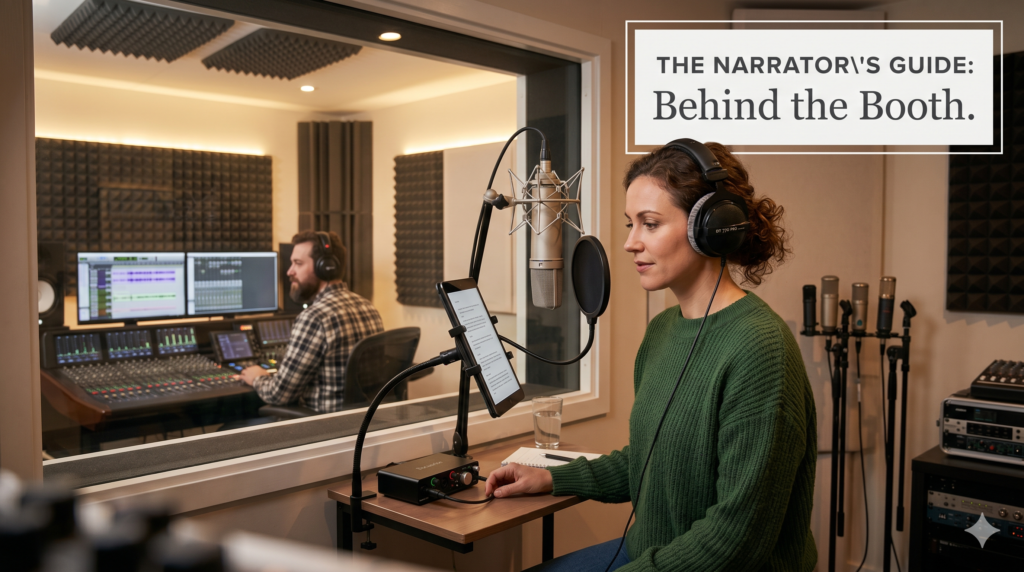
Professional audiobook production concentrates resource expenditure in controlled studio environments rather than mass-distribution manufacturing. Recording sessions use electricity and human time but avoid large-scale material production. Think of a craft bakery that produces a small batch of high-quality goods instead of a factory that churns out millions of disposable items.
Efficient scheduling and batch recording reduce studio hours and associated energy use. Grouping chapters and reusing studio setups for similar narrators minimizes setup time and heating or cooling loads. Consider how a chef prepares multiple dishes using the same oven window: efficient sequencing saves fuel and time.
Digital delivery removes repeat logistics and retail packaging emissions because a single upload replaces multiple physical shipments. Cloud distribution leverages optimized routes and content delivery networks that serve many listeners from nearby nodes. Visualize a postal system replaced by a network of neighborhood radios broadcasting the same program; the same content reaches many ears with fewer per-unit emissions.
Spatial Audio and Listener Psychology
Spatial audio creates a three-dimensional soundscape that enhances immersion while allowing lower overall loudness and clearer speech intelligibility. Better intelligibility can reduce the need for re-listening, cutting streaming time and energy. Think of spatial audio like a theater stage where actors are placed strategically so one voice carries without everyone shouting.
Spatialization techniques such as binaural rendering, ambisonics, and head-related transfer functions alter perceived direction and distance of sound sources. These techniques require processing power, yet smart encoding and rendering strategies keep computational cost manageable. Think of binaural rendering like placing speakers around a listener’s head so the brain fills in natural cues, similar to arranging actors around a stage instead of forcing them to stand in one spot.
Listener psychology shows that narrative immersion reduces multitasking and replays, improving efficient consumption. A well-produced spatial scene guides attention and memory, preventing listeners from scanning back and wasting listening time. Imagine a skilled stage director who cues the audience’s focus so the story unfolds smoothly without pauses or clarifications.
Production Techniques and Technical Standards
High-fidelity narration benefits from optimal bit depth and sample rate to preserve nuance, but efficient choices strike a balance between quality and file size. Bit depth controls dynamic range: think of bit depth like the depth of color in a painting where more depth gives finer shadow detail. Sample rate defines the highest frequency captured: think of sample rate like the number of frames in a film where more frames make motion smoother.
Bitrate and compression determine streaming bandwidth and storage footprint and must be chosen with care. Bitrate is like the width of a water pipe carrying audio; a wider pipe carries more water or data but consumes more capacity. Compression is a way to shrink audio by removing redundancies: think of it like folding clothes tightly to fit them in a smaller suitcase without losing the garment’s identity.
Industry standards in 2026 recommend consumer audiobooks use AAC-LC or Opus with variable bitrate profiles for speech, and lossless masters retained at 24-bit/48 kHz for archives. Opus behaves like a smart courier who repackages goods to fit the vehicle: it keeps essential content while minimizing volume. Maintaining high-resolution masters ensures future-proofing while day-to-day delivery uses efficient encoded variants.
The AudiobookMagic SONIC-6 Framework
The SONIC-6 Framework is an original model for audiobook production that balances Sustainability, Orchestration, Narration, Immersion, Compression, and Compliance. Sustainability targets carbon and material reduction. Orchestration focuses on production workflow. Narration emphasizes voice performance and direction. Immersion handles spatial techniques. Compression governs encoding strategy. Compliance ensures metadata and accessibility standards.
The SONIC-6 Framework sets actionable benchmarks: energy-per-hour targets for studio work, narrative clarity indices, spatial cue density limits, encoding profiles, and metadata completeness ratios. Energy-per-hour is like tracking fuel consumption per vehicle trip: smaller numbers mean greater efficiency. Spatial cue density is like the number of props on a stage; too many clutter the scene, too few make it flat.
The SONIC-6 model integrates listener psychology metrics into production choices so that every creative decision aligns with sustainability goals. Measuring engagement and re-listen rates informs whether spatialization or level adjustments reduce wasted listening. Think of engagement metrics like seating occupancy in a theatre: high occupancy with minimal turnover indicates an efficient performance.
Technical Table: SONIC-6 Recommended Targets (2026 Standards)
| Parameter | Recommended Value | Analogy |
|---|---|---|
| Archive Master | 24-bit / 48 kHz WAV | Like an original negative film for future prints |
| Delivery Encodes | Opus VBR / AAC-LC VBR (64–96 kbps speech) | Like dialing pipe width to match flow needs |
| Spatial Rendering | Binaural or 1st-order Ambisonics for mobile | Like placing actors to create realistic stage depth |
| Max File Size per Hour (Encode) | ~30–40 MB (64 kbps speech) | Like a compact travel suitcase for a week-long trip |
| Studio Energy Target | < 0.5 kWh per recorded hour (optimized setup) | Like running an energy-efficient kitchen during service |
Sustainability Metrics and Economic Impact
Measuring carbon per listening hour gives a comparable metric across formats and platforms. Carbon intensity of streaming depends on data center efficiency, network routing, and client device consumption. Think of carbon per hour like fuel economy in miles per gallon: lower numbers mean a more efficient journey.
Economic models show lower marginal costs for distributing additional copies of the same audiobook compared with printing and shipping new paperbacks. Marginal cost in digital is like a photocopier that creates hundreds of identical copies with minimal extra toner; each additional copy is cheap. Licensing models and royalty structures must adjust to reflect lower distribution costs while supporting narrators and producers.
Sustainability reporting should include scope 1, 2, and relevant scope 3 emissions from production, distribution, and end-user playback. Scope accounting is like tracking ingredients, cooking, and delivery in a restaurant: every stage contributes to the final footprint. Transparent reporting enables publishers and platforms to target the highest-return interventions.
Checklist: Production Quality Roadmap
- Capture masters at 24-bit/48 kHz with calibrated levels.
- Use studio scheduling to minimize idle time and energy use.
- Implement binaural or ambisonic templates for immersive narration when appropriate.
- Encode delivery files with Opus or AAC-LC VBR settings optimized for speech.
- Tag metadata and accessibility fields to reduce listener friction and replays.
Distribution, Accessibility, and Policy Considerations
Distribution policies drive how much energy content delivery consumes across regions and devices. Edge caching and local delivery nodes reduce transit energy and latency. Think of edge caching like neighborhood depots that reduce the distance a parcel must travel to the customer.
Accessibility features such as spoken chapter markers, searchable metadata, and multi-speed playback improve user experience and reduce re-listens. Speed-controlled playback can save time and energy when implemented without distortion. Think of playback speed like walking pace: a brisk but controlled pace can reach the destination faster without missing landmarks.
Policy incentives such as digital carbon labeling, platform offset programs, and supportive tax frameworks can accelerate sustainable practices in audiobook production. Labels that quantify per-hour emissions create market pressure for efficiency. Imagine nutritional labels that guide healthier food choices; carbon labels guide greener audio consumption.
Frequently Asked Questions
What is the single largest environmental advantage of audiobooks versus printed books?
Digital audiobooks eliminate the need for paper, ink, and physical distribution, cutting material and logistics emissions that dominate printed book lifecycles.
How should producers balance quality and file size when encoding for global audiences?
Producers should retain high-resolution masters and create multiple encoded variants using Opus or AAC-LC with VBR profiles. Think of variants like different serving sizes for diverse appetites; choose the one that fits listener bandwidth while preserving intelligibility.
Can spatial audio increase energy consumption significantly, and how do you mitigate that?
Spatial audio can add processing cost, but optimized rendering chains and client-side decoding reduce server load. Think of spatial processing like elaborate stage lighting: it adds power draw, but efficient LEDs and focused cues lower overall consumption.
What metrics should publishers report to demonstrate audiobook sustainability?
Publishers should report per-hour carbon intensity, studio energy usage per project, average encoded file sizes, and re-listen rates. These metrics function like yardsticks that show progress over time.
How does variable bitrate (VBR) compare to constant bitrate (CBR) for speech?
VBR adjusts data flow to complexity, saving bandwidth on simple passages and increasing it for complex segments. Think of VBR like a car that downshifts on hills and coasts on flats to save fuel. For speech, VBR maintains clarity while reducing average file size.
How should royalties change as distribution costs fall for digital formats?
Royalty models should prioritize fair compensation for narrators and producers by indexing a portion of payments to engagement metrics rather than distribution costs alone. Treat compensation like sharing box-office revenue: creators earn as audiences engage.
Conclusion: The Eco-Friendly Book
Digital audio offers a measurable path to reduce material waste, lower transport emissions, and extend the life of storytelling assets while preserving artistic quality. Producing with the SONIC-6 Framework anchors creative choices to sustainability targets and listener psychology. Imagine a finely directed radio drama that reaches millions without a single printed page changed.
Sustainable production practices combined with efficient encoding and spatial techniques can decrease carbon per listening hour substantially within current industry capabilities. Retaining lossless masters and distributing optimized encoded streams is like keeping a master painting in a vault while sending light prints to galleries. This approach preserves future value and minimizes present impact.
Forecast for the next 12 months: adoption of Opus VBR for speech will grow among major platforms, more publishers will publish carbon-per-hour labels, and spatial audio templates for audiobooks will standardize, leading to a measurable drop in per-listen emissions and improved listener retention.
Follow the SONIC-6 roadmap to produce beautiful, efficient, and sustainable audiobooks that respect both craft and climate.
Meta Description: Audiobook production strategies and the SONIC-6 Framework showing why digital audio is the most sustainable reading choice.
SEO Tags: audiobooks, sustainability, spatial audio, Opus, audiobook production, SONIC-6, carbon footprint