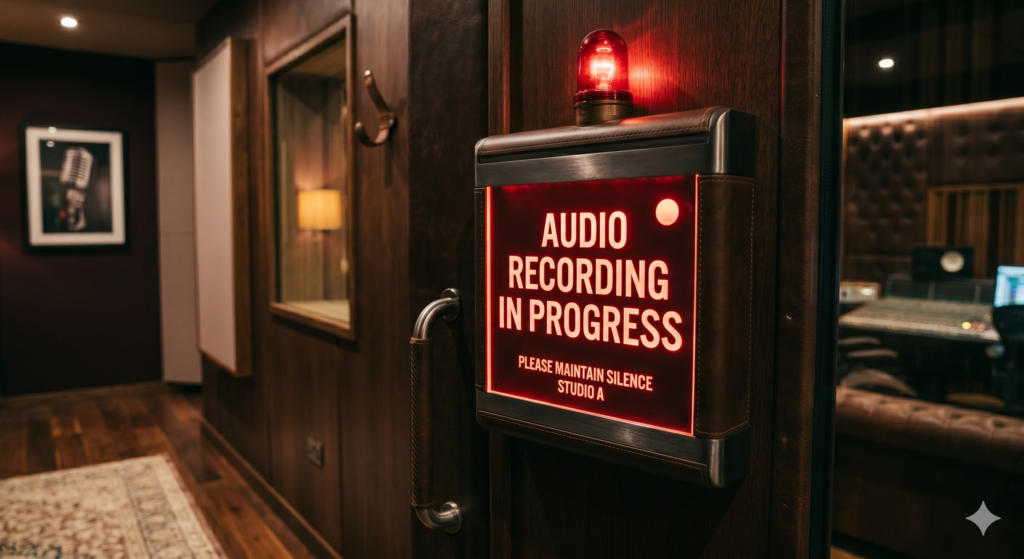

Home Studios as Professional Narration Hubs
The Home Studio Revolution: Narration now demands the fidelity and control that only a dedicated home studio can deliver. Think of a home studio like a small theatre: the walls, mic placement, and gear shape how the voice sits in a listener’s head. That sensory control lets narrators craft breaths, consonants, and room tone with the same intention a stage actor uses for distance and presence.
Narration now requires consistency across sessions to maintain character continuity and listener immersion. Think of sample rate like the number of frames in a film: higher rates capture subtler motion of the voice. Maintaining the same sample rate and bit depth across sessions prevents timbral drift that makes a character sound different from one chapter to the next.
Narration now benefits from modular workflow models that fit professional delivery windows and publisher expectations. Think of a production model like a restaurant kitchen line: each station has a role, from raw performance to final QC. Following that model reduces back-and-forth with producers and speeds up approvals without sacrificing artistic nuance.
Narration in 2026 is a hybrid craft that blends performance, acoustics, and engineering priorities. The home studio revolution has pushed professional standards into domestic spaces while raising expectations for predictable, broadcast-grade output. This briefing frames how narrators can meet those expectations while keeping the performance human and immediate.
The narrator’s room as instrument
Narration demands a tuned acoustic space where reflections are controlled and desirable resonances preserved. Think of room treatment like tailoring clothing: too much absorption makes the voice thin, too little leaves distracting echoes. The aim is a balanced room that supports the midrange where speech lives.
Microphone choice and signal path
Narration demands a microphone and signal chain that flatter the human voice without altering performance intention. Think of microphone character like brush type on a canvas: a large-diaphragm condenser paints warmth; a small-diaphragm adds crisp detail. A clean preamp and transparent A/D conversion preserve that tonal brushwork.
Studio Acoustics, Gear, and Listener Psychology by 2026
Acoustics now govern perceived intimacy more than raw volume. Think of direct-to-reflected sound ratio like proximity in a conversation: more direct sound feels close and confiding; more reflections feel ambient and distant. Mastering that balance determines whether a narrator feels like a friend reading in the room or a voice from a radio.
Acoustics now require objective measurement alongside subjective listening to hit industry standards. Think of an RTA sweep like a thermometer: it shows where energy peaks and dips are, but your ears decide what feels natural. Combine measurement with listening checks through multiple consumer devices to match how actual listeners hear the performance.
Acoustics now interact with listener psychology: timing, pauses, and spectral shaping influence comprehension and emotional response. Think of dynamic range like the rise and fall of a sentence in a dance: too compressed and phrases lose shape; too wide and quiet moments vanish on cheap earbuds. Properly tuned dynamic control preserves nuance and intelligibility.
Treatment tactics for small rooms
Acoustics require targeted treatments: bass traps, broadband absorption, and diffusion placed where modal energy and first reflections occur. Think of bass traps like cushions in a corner absorbing stubborn low-frequency rumble. Reflection points by the mic and reflectors in the opposite wall are where small fixes yield big improvements.
Gear priorities for narrators
Acoustics require prioritizing clarity over flashy specs: a neutral mic, a low-noise preamp, and reliable converters beat unnecessary features. Think of bit depth like color depth in a painting: higher bit depth preserves subtle dynamics and headroom so breaths and whispers keep natural texture during processing.
Performance Workflow and Remote Collaboration
Performance now benefits from a predictable session template that separates capture from editorial decisions. Think of session templates like scaffolding on a stage: they let you focus on acting rather than technical setup. Build templates that include track naming, slate tones, and consistent punch-in points.
Performance now requires a communication protocol for remote direction and live director notes. Think of a director feed like a two-way mirror: the director hears what the audience will hear and guides performance from that vantage. Low-latency monitoring and a dedicated talkback path keep the emotional exchange immediate.
Performance now benefits from the Narrator-Centric Production Model, the NCP Model, which codifies roles, deliverables, and checkpoints. Think of the NCP Model like a conductor’s score: it lays out pre-session checks, record protocols, editorial passes, first-pass mixes, and final QC. Implementing NCP reduces revisions and aligns narrator and producer priorities.
NCP Model: practical steps
Performance requires clear checkpoints: pre-session mic check, slate and slate tone, chapter capture with markers, session notes, and export presets. Think of markers like bookmarks in a book: they make returning to critical takes fast and accurate.
Remote tooling and fidelity
Performance requires planning for transport of large files and proofing mixes through consumer devices. Think of file transfer like shipping a fragile object: proper packaging and labeling reduces damage. Use checksum-verified transfers and provide low-bitrate previews for first approvals.
Spatial Audio and Binaural Narration Techniques
Spatial audio now allows narrators to place voice elements within a 3D field for enhanced immersion. Think of spatial panning like seating arrangements in a small theatre: a voice slightly to the left feels like someone sitting next to you, while subtle distance adds confidentiality. For narrative emphasis, spatial cues must be intentional.
Spatial audio now demands attention to head-related transfer functions and playback variability across devices. Think of HRTFs like prescriptions for glasses: a poor fit distorts perception. Provide downmix-safe spatial manifests and binaural renders to ensure experiences hold up on stereo earbuds and smart speakers.
Spatial audio now interacts with storytelling choices: moving a character across the soundstage alters perceived intention. Think of motion in space like camera movement: it guides gaze and focus. Use micro-movements and subtle reverb changes to suggest distance and environment without distracting from narration.
Binaural recording tactics
Spatial audio requires consistent head and mic geometry for binaural captures, or reliable virtual binaural rendering in post. Think of dummy-head recording like a physical mannequin with ears: it captures spatial cues faithfully for headphone listeners.
Delivering spatial assets
Spatial audio requires multiple deliverables when publishers and platforms differ in support: stereo downmix, ambisonic master, and headset-optimized binaural render. Think of these exports like different resolutions of a photograph: each contains the same content scaled for its intended display.
Post-production, Mixing Standards and Delivery Formats
Post-production now sets the final emotional tone through editing, EQ, and dynamics that respect performance intent. Think of editing like pruning a plant: remove only what obscures growth; keep the natural shape of phrases. Clean edits, consistent breaths, and intentional pacing maintain narrative rhythm.
Post-production now follows stricter loudness and format standards for 2026 distribution channels. Think of loudness like table salt: correct seasoning improves clarity; overuse ruins the meal. Target platform loudness targets and provide stems when requested to support platform-level mastering.
Post-production now must consider codecs and compression that affect listener perception. Think of compression like vacuum-packing food: it reduces size but may change texture. Provide high-resolution masters and transparent compressed files, and explain how perceptual codecs will alter transient detail and low-level ambience.
Technical table: delivery specifications
Post-production requires adherence to formats and metadata that publishers expect. The table below summarizes common 2026 standards.
| Deliverable | Sample Rate | Bit Depth | File Type | Typical Use |
|---|---|---|---|---|
| Production Master | 96 kHz | 24-bit | WAV/FLAC | High-resolution archive and spatial masters |
| Editorial Master | 48 kHz | 24-bit | WAV | DAW editing and standard mixes |
| Stereo Deliverable | 48 kHz | 24-bit | WAV/MP3 (320 kbps) | Publisher stereo uploads and proofs |
| Binaural Render | 48 kHz | 24-bit | WAV | Headphone-optimized immersive listening |
| AAC/MP3 Consumer | 44.1 kHz | 16-bit | AAC/MP3 | End-user streaming downloads |
Codec analogy and choices
Post-production requires knowledge of perceptual codecs and their effects. Think of bitrate like the width of a road: wider roads carry more traffic without congestion. Higher bitrates keep transient detail and ambience that low bitrates discard.
Business, Branding, and Quality Assurance for Narrators
Business now depends on repeatable quality and on-brand sonic signatures that publishers recognize. Think of a sonic signature like a visual logo: consistent tone, pacing, and mic choice signal professionalism. Maintain a reference track for each project that becomes the tonal target.
Business now requires a Production Quality Roadmap to ensure consistent outputs under deadline pressure. Think of a roadmap like a flight checklist: follow it each time to reduce risk of missed elements. The roadmap below provides five non-negotiable steps to hit professional quality.
Production Quality Roadmap:
- Calibrate studio and monitor levels using a reference tone and loudness meter.
- Confirm mic, preamp, and sample rate match project specs before recording.
- Record with slate, markers, and session notes, and maintain organized take naming.
- Perform editorial pass that preserves performance while removing technical flaws.
- Export package with labeled files, metadata, and verified checksum for delivery.
Quality assurance workflow
Business requires final QC passes on multiple consumer devices including headphones, laptop speakers, and smart earbuds. Think of QC like test-driving a car on different roads: each surface reveals different handling issues. Log issues and resolve them before delivery.
Negotiating and contracts
Business requires clear contract terms on usage rights, revisions, and deliverable formats. Think of contract terms like lane markers: they prevent collisions in expectations. Be explicit about turnarounds, revision allowances, and fee for additional editorial work.
Conclusion: Living Rooms as Listening Theatres
Professional narration in 2026 marries craft and engineering so that home studios deliver broadcast-grade experiences. Think of a professional home studio like a small auditorium where every surface and setting contributes to storytelling. The narrator’s choices in timing, mic, and spatial placement shape how listeners feel and remember a book.
Conclusion requires a final affirmation that standards matter as much as artistry: follow the NCP Model, submit correct deliverables, and perform consistent QC. Think of these standards like a stage manager’s checklist: they let the performer focus on emotion while the production guarantees clarity and consistency. Publishers will reward narrators who deliver both performance and predictable technical quality.
Conclusion requires a 12-month trend prediction to help plan capabilities and investments. Think of the next 12 months like a carefully timed run: spatial audio adoption will increase among premium publishers, hybrid remote direction will become standard, and demand for high-resolution masters will rise. Expect wider platform support for binaural files, more rigorous loudness checks, and increased use of standardized QC tooling. Invest in calibrated monitoring, low-latency feeds, and a clean signal chain to stay competitive.
FAQ
How should narrators match sample rates and bit depths across intermittent recording sessions to prevent timbral drift?
What measurable acoustic parameters should be prioritized in a small home booth to improve speech intelligibility?
How can spatial audio be rendered to remain consistent across earbuds, stereo speakers, and smart speakers without losing narrative focus?
What checkpoints in the NCP Model most reduce revision cycles when working with large audiobook publishers?
Which perceptual codec artifacts most affect comprehension and emotional nuance on low-bandwidth consumer devices?
How should narrators structure contracts and deliverable manifests to cover emerging formats like ambisonics and binaural WAV stems?
Meta Description: Professional narrators’ home studios in 2026: acoustics, gear, spatial audio, and a practical production model for broadcast-quality audiobooks.