
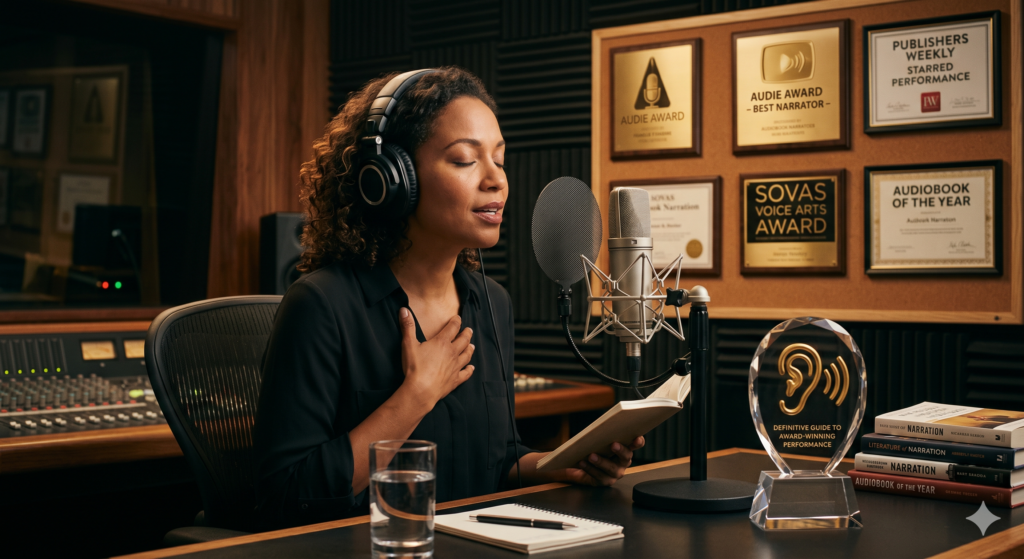
Micro-Expression in Sound: A smiling narrator raises pitch subtly in the upper midrange and introduces a slight breathiness that listeners read as warmth. Think of pitch as color saturation in a painting: a small change makes the scene feel brighter without changing the whole picture.
A smile narrows formant bandwidths and accentuates the interplay between the first and second formants, which gives vowels a more rounded, open quality. Think of formants as the shape of a room: altering the walls changes how sound bounces and what the ear perceives.
A smiling delivery shortens vowel duration just enough to suggest lightness while maintaining steady breath support to avoid sounding clipped. Think of duration like the length of a brushstroke: shorter strokes can make a scene feel brisk and lively.
A Practical Frame for Narrators and Producers
A smile in the voice functions as a micro-expression encoded through spectral tilt, prosody, and subtle timing shifts. Think of spectral tilt like the slope of a hill: more energy at the top or bottom changes how you approach the climb.
A narrator can learn to sprinkle these cues with intent while the producer captures them faithfully through mic choice and capture chain settings. Think of mic choice like choosing a lens on a camera: a wide lens captures environment, a tight lens isolates the subject.
A producer must also consider the listener environment and distribution format to preserve the micro-expression across platforms in 2026 standards. Think of distribution formats like postal services: fragile parcels need different packaging than robust goods.
Acoustic Cues That Sell a Gentle Smile to Listeners
A spectrally brighter voice with a slight decrease in spectral slope signals a smile to the unconscious ear. Think of spectral slope like the lighting of a theater: brighter lights reveal facial expressions more clearly.
A lifted second formant and a small upward glide at the ends of phrases create an audible curl that feels like a smile without a visual cue. Think of an upward glide like tilting a picture frame upward to show more of the sky.
A measured increase in micro-dynamics around consonant onsets and phrase-final syllables gives the narration a tactile friendliness. Think of micro-dynamics like fingertip pressure on keys: subtle variations make the melody feel human.
Timing and Micro-Prosody
A gentle shortening of inter-word gaps conveys approachability and rhythmic buoyancy. Think of inter-word gaps like the spacing between footprints on a path: closer steps feel more companionable.
A slight anticipation on phrase entries communicates engagement and warmth without intruding on clarity. Think of anticipation like leaning in during a conversation: it signals interest.
A controlled vibrato-free vibrancy in sustained vowels keeps the smile believable while preserving intelligibility. Think of vibrancy as the texture of fabric: too much pattern distracts, just enough adds character.
The SMILE-Sync Model for Narration
A named framework helps producers and narrators reproduce smile cues consistently across projects: introduce the SMILE-Sync Model. SMILE-Sync stands for Spectral Manipulation, Micro-Inflection, Lip shaping, Energy contour, Synchronization, and Calibration. Think of the model like a recipe: follow proportions and the dish tastes consistent every time.
A practical implementation sequence for SMILE-Sync starts with breath alignment, then spectral shaping, followed by timed micro-inflections during read-throughs. Think of sequence like tuning an instrument before performance: order matters to achieve the intended tone.
A calibration routine in SMILE-Sync uses A/B comparisons with reference reads and listener panels to lock in parameters for each narrator and genre. Think of calibration like white-balancing a camera: it ensures colors render correctly under different lights.
SMILE-Sync Parameters and Metrics
A measurable parameter set includes pitch shift range, spectral tilt delta, phrase-final rise in cents, and micro-dynamic envelope amplitude. Think of pitch shift range like the size of a notch on a dial: small turns produce noticeable but controlled results.
A target metric for a subtle smile is typically a 10 to 30 cent upward bias on phrase endings and a 1 to 3 dB midrange lift between 1 and 3 kHz. Think of dB adjustments like moving the volume fader slightly: small moves create big perceptual changes.
A performance tolerance band for SMILE-Sync helps engineers set thresholds in mixing and mastering to preserve intent across codecs. Think of tolerance bands like guardrails on a road: they keep you on the intended path.
Recording Techniques and Microphone Choices
A close cardioid condenser captures mouth-detail and breath presence that carry the micro-expression of a smile best for audiobooks. Think of cardioid selection like choosing a close-up lens: it isolates the subject from distracting room reflections.
A pop filter and consistent mouth-to-mic distance of 6 to 12 centimeters reduce plosive artifacts while preserving lip-smack nuances that contribute to perceived warmth. Think of distance like the space between two people speaking quietly: too close is overwhelming, too far feels detached.
A high-quality preamp with low noise and transparent gain structure preserves dynamic subtleties; set gain so peaks sit around -12 to -6 dBFS on the metering. Think of gain staging like setting exposure on a camera: correct exposure prevents lost detail in highlights or shadows.
Mic Polar Patterns and Room Interaction
A figure-of-eight polar pattern can add natural cross-cancellation and air that enhances perceived closeness when used in controlled rooms. Think of polar patterns like the shape of a window: the view changes with angle.
A room treated to reduce slap reflections but not completely dead preserves the small reverberant cues that help the mind reconstruct a smiling presence. Think of room treatment like acoustic seasoning: a little salt enhances flavors, too much flattens them.
A matched pair of microphones for stereo or mid-side capture gives producers spatial options for creating intimacy while maintaining localization. Think of stereo capture like planting two microphones as ears: they maintain directional information.
Editing, Mixing, and Spatial Considerations
A surgical edit should preserve micro-prosodic timing and avoid quantizing human breath and cadence into robotic regularity. Think of editing like pruning a bonsai: careful cuts preserve natural shape.
A transparent EQ that gently boosts 1.5 to 3 kHz for presence and slightly attenuates 200 to 400 Hz to avoid muddiness helps the smile read across devices. Think of EQ like adjusting a headlamp: you aim light where it reveals faces best without blinding.
A spatial mix using near-binaural techniques and subtle early reflections places the voice in a believable acoustic space that supports perceived friendliness. Think of near-binaural as positioning a pair of microphones close to the listener’s ears: it recreates the sense of being in the same room.
Compression and Loudness Considerations
A light, program-dependent compression with slow attack and medium release preserves transients that cue smile timing while controlling peaks. Think of compression like a gentle hand on the shoulders: it guides motion without forcing it.
A final loudness target for audiobook distribution should follow 2026 ACX and publisher guidelines, typically targeting an integrated LUFS value that suits the platform and preserves dynamic nuance. Think of LUFS like the average brightness of a film scene: it determines how loud the overall experience feels.
A careful export strategy must consider codec behavior; for example, lossy codecs with strong low-bitrate compression will reduce subtle spectral cues unless the source is delivered with headroom. Think of compression codecs like postal services: some fold and compress contents for shipment, risking delicate items unless packed properly.
Psychophysics and Listener Response
A consistent correlation exists between specific acoustic cues and perceived warmth, trust, and approachability in listeners across cultures. Think of this correlation like a recipe that yields a familiar flavor profile to different palates.
A/B testing with controlled listener panels using blind comparisons quantifies how much a smile cue moves perception on scales like warmth and credibility. Think of A/B testing like tasting two batches of the same soup: you can name which has more seasoning.
A cross-platform validation step ensures that smile cues survive typical listening paths such as earbuds, smart speakers, and car systems under 2026 codec realities. Think of cross-platform validation like test-driving a car in different terrains to ensure consistent performance.
Technical Table: Capture and Delivery Parameters (2026 Standards)
| Parameter | Typical 2026 Setting | Perceptual Effect | Analogy |
|---|---|---|---|
| Sample Rate | 48 kHz | Captures full vocal harmonics above 20 kHz margin. Think of sample rate like camera frames per second: more frames catch more motion. | |
| Bit Depth | 24-bit | Preserves dynamic nuance and headroom. Think of bit depth like depth of color in a painting: more bits equal finer tonal gradations. | |
| Gain Staging | Peaks around -6 dBFS | Provides headroom for codecs and prevents clipping. Think of gain staging like setting exposure: prevents blown highlights. | |
| Compressor Ratio | 1.5:1 to 3:1 program-dependent | Controls dynamics but preserves micro-variations. Think of compression like a gentle hand guiding a musician. | |
| EQ Focus | +1 to +3 dB at 1.5-3 kHz, -1 to -3 dB at 200-400 Hz | Enhances presence and reduces muddiness. Think of EQ like adjusting a headlamp to see faces. | |
| Loudness Target | Platform-dependent (e.g., -16 LUFS ±1) | Matches listener expectations and avoids normalization artifacts. Think of LUFS like scene brightness. | |
| Codec Consideration | Use high-bitrate or lossless masters for distribution encoding | Protects micro-expressions during lossy conversion. Think of sending fragile goods in a sturdy box. |
Production Quality Roadmap
- Capture: Use 24-bit / 48 kHz with a close cardioid and consistent 6-12 cm distance to preserve detail.
- Perform: Apply SMILE-Sync rehearsal routines, recording multiple takes with varying micro-inflections.
- Edit: Maintain micro-prosodic timing; avoid aggressive quantization or time-compression on breaths.
- Mix: Use transparent EQ and program compression; validate presence across earbuds and speakers.
- Deliver: Archive a lossless master and create platform-specific encodes with controlled loudness.
Psychometrics for Producer-Led Testing
A validated test panel should include naive listeners and trained evaluators to differentiate between conscious and unconscious perceptions. Think of test panels like a focus group for flavor: diverse tasters reveal consistent preferences.
A battery of perceptual metrics should include warmth, intelligibility, trust, and fatigue over time to monitor listener retention. Think of metrics like measuring temperature, pressure, and humidity to forecast weather.
A rolling QA process that samples encodes post-translation to final distribution spots prevents surprises from platform-specific normalization. Think of QA like quality-checking items after packaging but before shipping.
Implementation Checklist for Production
A checklist must be used on every session to ensure capture, performance, and delivery steps are completed and documented. Think of a checklist like a pilot’s pre-flight routine: it reduces human error.
A maintenance log for microphones, preamps, and room calibration keeps the capture chain consistent across sessions. Think of maintenance like tuning an instrument regularly.
A versioning system for takes and mixes ensures reproducibility if later adjustments are requested by publishers. Think of versioning like saving incremental drafts of a manuscript.
FAQ
What precise spectral changes should I target to produce a believable smile in narration?
A measurable approach is to aim for a 1 to 3 dB midrange lift between 1.5 and 3 kHz combined with a 10 to 30 cent upward phrase-final bias. Think of dB as moving a small knob on a mixing desk; slight turns yield perceivable warmth.
How do I prevent microphone proximity effects from masking smile cues?
A controlled mouth-to-mic distance of 6 to 12 cm and slight off-axis positioning reduce bass build-up while keeping lip-detail intact. Think of proximity effect like standing too close to a painting: you see texture but lose the overall composition.
Which codecs and loudness standards should I prioritize for 2026 audiobook distribution?
A lossless archive and high-bitrate platform encodes that meet platform loudness targets such as -16 LUFS for spoken word are recommended, with careful normalization checks. Think of maintaining a lossless archive like keeping the original film negative safe for future prints.
Can spatial audio help convey a smile better than stereo?
A near-binaural mix with subtle early reflections can increase the sensation of presence and interpersonal distance, which enhances perceived warmth for many listeners. Think of spatial audio like sitting closer at a table: you feel more engaged.
How do I train narrators to produce consistent smile micro-expressions across long sessions?
A routine of warm-ups focusing on lifted vowel shaping, controlled breath timing, and short phrase exercises with immediate playback creates muscle memory for micro-cues. Think of this training like an athlete doing targeted drills before a match.
What objective tests can prove that a smile cue improved listener response?
A/B blind testing measuring metrics such as perceived warmth, trustworthiness, and comprehension, combined with retention and completion rates, provides objective evidence. Think of this testing like running two versions of an ad to see which performs better.
Final Notes for Producers and Narrators
A deliberate, model-driven approach to vocal micro-expressions ensures repeatable results while respecting genre and narrator individuality. Think of model-driven work like following a chef’s recipe while adding personal seasoning.
A producer must balance technical capture, empathic direction, and rigorous QA to deliver smile cues that survive modern codecs and diverse listening environments. Think of this balance like tuning a fine instrument: it must sound right in any concert hall.
A continuous feedback loop between narrator, producer, and listener analytics future-proofs voice productions for evolving 2026 platform behaviors. Think of feedback loops like iterative software updates that refine user experience.
Conclusion: Micro-Expression in Sound — Practical Forecast and Takeaways
A near-term trend over the next 12 months will see broader adoption of standardized capture chains and model-based rehearsal protocols like SMILE-Sync across audiobook studios. Think of this trend like studios adopting a common film standard that raises baseline quality.
A growing expectation among publishers for documented QA and listener-tested voice profiles will push producers to maintain lossless masters and rigorous metadata for voice characteristics. Think of this expectation like a record label asking for stems and multitrack sessions with every release.
A continued focus on spatially-aware mixes and platform-aware encoding will make subtle emotional cues more reliable across devices, improving listener engagement and completion metrics. Think of this focus like improving road surfaces to reduce vehicle vibration and enhance ride comfort.