
Forecasting 2026: The Next Billion-Dollar Audio Trend
Spatially rendered narrative experiences will drive the next large-scale revenue wave in audio entertainment, with audiobooks at the center of adoption.
Spatial audio technology will move beyond novelty into a standard delivery format for premium audiobook releases by 2026, offering precise placement of voices, ambience, and effects. Think of spatial audio like a theatrical stage: each sound has a fixed seat on that stage and the listener is seated center-front.
Producing spatial audiobooks will require new creative roles and production budgets that mirror film sound design budgets more than traditional audiobook narrations. Think of production budgets like paint layers in a fresco: more layers create finer detail and depth.
Consumer willingness to pay for immersive, multi-track experiences will increase as hardware and streaming infrastructure support consistent quality. Think of bitrate like the width of a garden hose: higher bitrate allows more audio information to flow without choking.
Spatial Audio Meets Performance and Listener Psychology
Spatial narration will shift directorial focus from single-voice clarity to spatial interplay among characters, ambient cues, and psychoacoustic markers. The MPEG-H 3D Audio standard specifies technology for transmitting immersive audio and rendering it across different speaker and headphone setups. Think of psychoacoustics like scent cues in a room: a faint smell can suggest a scene without visual detail.
Actor performance techniques will adapt to spatial staging, with narrators using proxemics, movement cues, and breath placement to convey distance and orientation. Think of proxemics like stage blocking in theatre where a step left communicates intent without dialogue.
Listener psychology will reward spatial cues that respect cognitive load and narrative pacing, using subtle motion and depth to reduce fatigue and heighten immersion. Think of compression like packing a suitcase efficiently: good compression saves space without squashing the contents.
Performance Art Integration: Casting, Direction, and Vocal Design
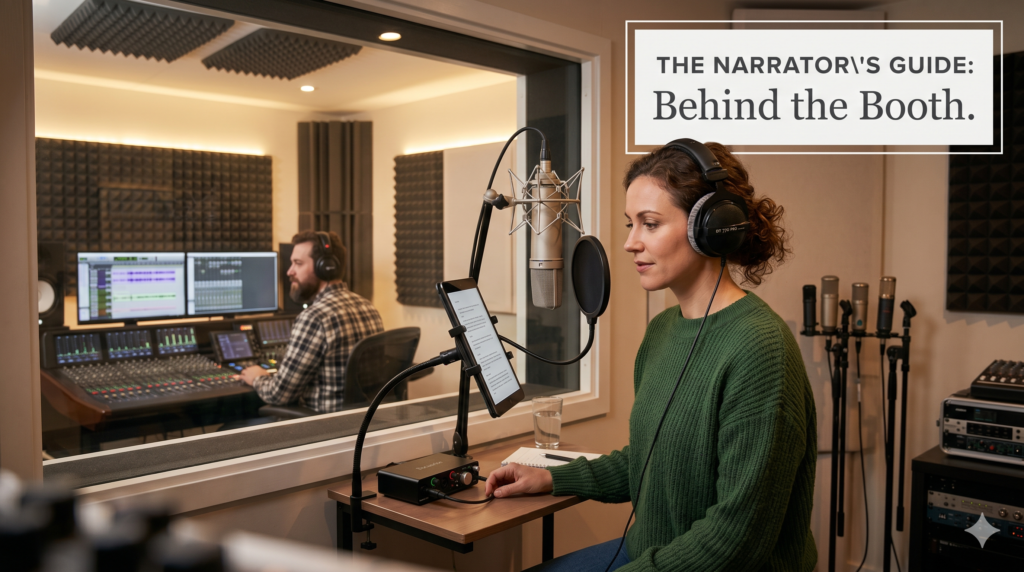
Casting will prioritize spatially trained voice actors who can modulate placement and deliver layered scenes live or through tracked performance. Think of multi-channel performance like a choir: each voice occupies its own slot and blends into harmony.
Directors will adopt practices from film ADR and theatre direction, cueing actors for spatial positions and interaction with virtual acoustics. Think of latency like the echo in a tiled hall: too much echo feels delayed and confusing.
Vocal design will embrace micro-dynamics, controlled sibilance, and localized reverberation to maintain clarity across channels. Think of bit depth like the grain in a photograph: higher bit depth captures subtle shades and prevents banding in quiet passages.
Production Workflow and the AudiobookMagic Spatial Narrative Model (AMSN Model)
The AMSN Model will standardize how producers move from manuscript to spatial mix by defining stages: spatial script, stage mapping, multi-track capture, dynamic mixing, and adaptive encoding. Think of the model like an assembly line in a workshop: each station adds a layer of finish.
The workflow will require integrated tools for auditioning spatial placements in headphones and loudspeakers, with immediate feedback on intelligibility and immersion. Think of monitoring like tasting a sauce while cooking: you adjust seasoning iteratively.
Encoding and delivery will follow a profile that balances channel fidelity, bitrate, and compatibility with mainstream players using perceptual codecs that preserve spatial cues. Think of a codec like a chef compressing a stew into a frozen meal: it needs to retain aroma and texture for later reheating.
Technical Table: 2026 Spatial Audiobook Delivery Standards
| Parameter | 2026 Recommended Standard | Real-world Analogy |
|---|---|---|
| Sample Rate | 48 kHz | Like frame rate in a film: smooth motion capture |
| Bit Depth | 24-bit | Like color depth in a painting: more shades, less noise |
| Channel Formats | Ambisonics 3rd order or object-based 16-32 channels | Like seating sections in a concert hall: more seats, finer placement |
| Target Bitrate | 384-768 kbps (stereo equivalent per stream) | Like hose width: wider for fuller flow |
| Latency Budget | < 40 ms for live interaction | Like a conversational pause: under 40 ms feels immediate |
| Loudness Target | -16 LUFS integrated | Like thermostat setpoint for consistent comfort |
| File Container | MPEG-H/Immersive AAC or standardized OPUS profiles | Like a robust travel case: protects contents across journeys |
Tools, Encoding, and Distribution Ecosystem
Spatial audio will require toolchains that integrate DAWs, ambisonic plugins, and distribution wrappers that advertise spatial metadata to apps. Think of metadata like a museum plaque: it tells a player how to arrange the piece for display.
Encoding choices will affect perceived depth and localization; producers must verify perceptual integrity after encoding using reference binaural renders. Think of perceptual testing like a wine tasting flight: small differences become apparent when compared.
Distribution platforms will offer tiered delivery: standard stereo for mass markets and enhanced spatial masters behind premium subscription or single-purchase models. Think of delivery tiers like airline classes: different seats for different price points.
Market Strategy, Monetization, and Rights Management
Monetization will lean on premium releases, episodic spatial originals, and licensing spatial masters for immersive devices and subscription exclusives. Think of licensing like theater rights: one company can stage the same play in a different city.
Rights management will need to track multi-channel stems, performer spatial performance rights, and derivative mixes for localization. Think of stems like layers in a cake: each layer can be removed or replaced without demolishing the whole cake.
Marketing will emphasize experiential hooks and sensory descriptors, using short spatial demos to convert skeptics into subscribers. Think of demos like perfume samples in a store: a brief inhale can trigger a purchase.
Standards, Measurement, and Accessibility
Standards organizations will publish deposition methods for measuring spatial intelligibility and immersion scores, combining objective metrics with listener testing. Think of measurement like a ruler and scale: objective but complemented by human judgment.
Accessibility will evolve to include customizable spatial mixes: simplified mono stems, enhanced-clarity modes, and haptic supplements for deaf or hard-of-hearing listeners. Think of accessibility like adjustable lighting: it lets each person set comfort levels.
Data-driven measurement will track completion rates, revisits, and listener fatigue to guide adaptive mixes and release strategies. Think of these analytics like a fitness tracker: it shows how listeners respond over time.
Production Quality Roadmap
- Capture multi-track clean: record dry stems and room mics separately to allow precise spatial placement.
- Spatial script mapping: annotate manuscripts with location, movement, and reverb cues before recording.
- Reference binaural checks: perform headphone and speaker audits at each mix pass.
- Loudness and intelligibility gating: target -16 LUFS and run short-listener tests for speech clarity.
- Deliver masters and adaptive stems: provide both object-based masters and stereo-compatible mixes.
FAQ
What encoding settings should I choose to preserve spatial cues without inflating file size?
Encoding choices must balance channel count against perceptual quality using object-based codecs or high-order ambisonics with perceptual compression. Think of choosing codecs like selecting jars for jam: pick sizes that fit usage and storage.
How do I direct an actor to "move" sound in a virtual space during performance capture?
Direction must use spatial stage marks and timed cues while actors deliver consistent breath and distance modulation for localization. Think of stage direction like choreography: small steps register clearly in the final mix.
How do we measure listener fatigue in spatial audiobooks?
Measurement must combine listening duration metrics, subjective surveys, and short cognitive-load tests to detect fatigue thresholds. Think of fatigue testing like monitoring screen time: combined objective and subjective measures tell the full story.
What hardware should producers recommend for optimal listening?
Recommendations must include headphones with accurate low-frequency response and devices that support object-based decoding; include recommended mobile and smart speaker models. Think of hardware choice like choosing lenses for a camera: the lens shapes the image.
How are performer royalties adjusted for spatial mixes and multi-track deliveries?
Royalty frameworks must separate performance of speech stems from spatial design contributions, creating line items for spatial masters and derivative stereo mixes. Think of royalties like royalties for translated editions: each format earns its own accounting.
How will publishers integrate spatial production into release schedules?
Publishers must build spatial design time into timelines, including onboarding, two-pass recording, and spatial mixing windows that mirror film post schedules. Think of schedule integration like adding an extra rehearsal to ensure a complex scene runs smoothly.
Conclusion: The Next Twelve Months Forecast
The 12-month horizon will see accelerated adoption of spatial audiobooks among premium subscribers, standardized production workflows, and clearer monetization paths that elevate production quality and listener retention.
Adoption will rise as three things converge: accessible toolchains, platform support for spatial metadata, and high-profile releases that set listener expectations. Think of market adoption like a tide: once the shoreline is wetted by the first releases, the rest follows.
Revenue will skew toward premium releases and episodic originals while stereo editions remain the mass-market floor. Think of revenue tiers like tiers in hospitality: basic comfort remains available, while premium services command higher rates.
Standards and the AMSN Model will gain traction among studios and publishers, shortening production cycles and reducing variance in listener experience. Think of model adoption like an industry blueprint: it speeds up construction and raises the baseline of quality.
Meta Description: Predictive briefing on how spatial audio, performance, and psychology will create the next billion-dollar audiobook trend in 2026.
SEO Tags: spatial audio, audiobooks, audiobook production, immersive audio, AMSN Model, audio standards, 2026 audio market