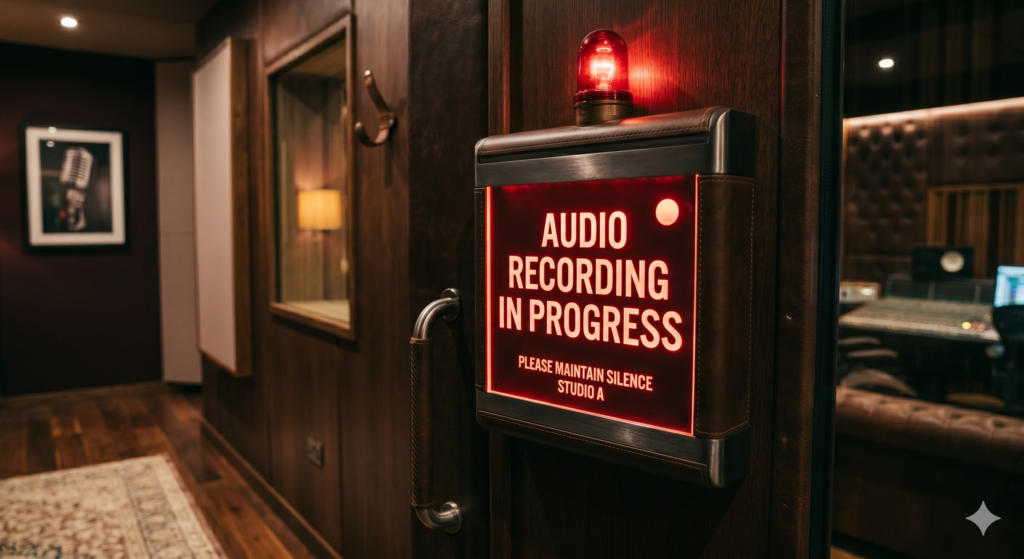

How Long-Term Narrators Become Part of the Family
Long-Term Series Voice Actors create aural continuity that roots a series in the listener’s daily life. Their voice becomes a predictable sonic anchor, much like the smell of a particular kitchen on a Sunday morning. This recognition fuels habitual listening and encourages listener loyalty.
Long-term narrators maintain performance consistency through subtle variations that signal growth without breaking familiarity. Consistency in tone and pacing acts like a seasoning recipe: small tweaks adjust flavor while the base remains the same. Listeners perceive changes as development rather than disruption.
Long-term narrators accumulate emotional memory across projects, embedding affective cues that cue recall of past scenes. Emotional recall functions like the patina on an old photograph: the texture carries history. That cumulative memory shapes how audiences interpret new episodes and deepens trust.
The Optimized “Audiobook Magic” Briefing
Long-form audiobook and serialized audio production demand a synthesis of performance craft, technical fidelity, and listener psychology. AudiobookMagic.co.uk needs an operational brief that translates studio practice into scalable production standards for 2026. This briefing frames actionable tactics and an original operational model to help producers make narrators feel like family to their audiences.
Long-form narration requires clear workflows that preserve voice identity while meeting modern loudness, codec, and spatial standards. Standards act like a recipe card: follow them and the dish reliably satisfies. The following chapters will outline craft, technical standards, and psychology with practical analogies for engineers and directors.
Long-term vocational guidance for narrators must live beside technical documentation so performers and mixers speak the same language. Shared language is like a map in a complex city: it lets teams navigate quickly and avoid detours. Adopt the heuristics presented here to reduce revision cycles and keep performances intimate and consistent.
The Familiar Voice: Building Trust Across Seasons
Long-term narrators build trust through vocal reliability and predictability in breathing, pacing, and timbre. Reliable elements are like the hinge on a well-used door: small, unseen, and essential to smooth opening. Audiences expect and rely on those micro-choices.
Long-term narrators modulate emphasis and color to reflect narrative arcs while keeping core timbral markers intact. Timbral markers are like the logo on a product: they signal identity without overwhelming the new material. Careful direction preserves those markers in performance notes and metadata.
Long-term narrators become collaborators with production design by adapting to spatial mixes and immersive cues. Adaptation functions like a musician tuning to the room: the voice changes subtly to match the acoustic environment. That adaptability keeps the narrator integral to evolving show aesthetics.
Performance Craft and Consistency
Long-form narrators focus on breath control, vowel placement, and consonant clarity to sustain clarity across sessions. Breath control is like the foundation of a building: unseen yet critical to structural integrity. Coaches should log breathing patterns and note decisions in session sheets.
Long-form narrators maintain emotional continuity through motif anchors such as a recurring pitch contour or a signature cadence. Motif anchors operate like a leitmotif in music: they cue recognition and emotion. Directors should capture these anchors in reference files for each character and chapter.
Long-form narrators follow the HEAR Model for sustained identity: Habituation, Energy calibration, Articulation, and Resonance. Habituation refers to repeated safe vocal choices that become recognizable. Energy calibration is the measured application of vocal intensity. Articulation keeps words distinct. Resonance records the vocal color and mouth shape. The HEAR Model gives a checklist trainers and engineers can use to preserve voice identity across sessions.
HEAR Model Application
Long-term application of the HEAR Model requires targeted exercises and benchmarks recorded into session notes. Exercises act like muscle memory drills for athletes: repetition yields reliable performance under stress. Benchmark files should include reference takes for low, medium, and high energy.
Long-term application of the HEAR Model benefits from integrated metadata tagging in DAWs to mark motif anchors and breath points. Metadata tagging is like labeling film negatives: it makes retrieval fast and accurate. Standardize tag names across projects for consistency.
Long-term application of the HEAR Model improves cross-actor consistency when multiple narrators alternate. Cross-actor consistency is like a relay race handoff: seamless transitions preserve momentum. Use the HEAR checklist during casting and rehearsal to align interpretations.
Spatial Audio, Mixing, and Presence
Long-term series should specify spatial format targets early: stereo for ebooks, binaural or Ambisonics for immersive serials. Format choice is like choosing the canvas size for a painting: it determines how much detail you can present. For binaural, explain headset and playback expectations to narrators.
Long-term spatial mixing relies on careful reverb and proximity automation to maintain presence without muddiness. Reverb is like the acoustics of a room: a cathedral adds halo, a living room keeps intimacy. Use short plate emulations or convolution impulses of small rooms for narrator intimacy.
Long-term projects must maintain loudness targets and headroom: aim for -18 LUFS for audiobooks and allow 3 to 4 dB of headroom for transient peaks. LUFS is like the perceived brightness of a room: a consistent level prevents listener fatigue. Headroom is like a safety margin in engineering: it prevents clipping when dynamics spike.
Technical Standards and Codecs
Long-term distribution standards in 2026 recommend 48 kHz at 24-bit for production masters, with final delivery in AAC-LC or Opus 96 kbps+ depending on platform. Sample rate is like the frame rate of a film: higher rates capture finer motion. Bit depth is like the depth of color in a painting: more depth yields smoother gradients in dynamics.
Long-term compression strategy should use linear gain staging, conservative dynamic range compression, and minimal brickwall limiting. Compression is like squeezing a sponge: over-squeeze and you lose texture. Limiting is like a safety valve: it prevents blows but can flatten expression if abused.
Long-term archival formats should include uncompressed masters and an intermediary FLAC at 24-bit for exchange. Archival formats are like storing original negatives rather than prints: preserve the source so you can re-render for future standards. Include full session backups and versioned metadata with each master.
Listener Psychology and Attachment
Long-term listeners form parasocial bonds with consistent narrators through repeated exposure and voice predictability. Parasocial bonds are like friendship rituals: repeated small acts create emotional closeness. Track listener engagement metrics against narrator consistency to quantify attachment.
Long-term attachment increases when narrators signal reliability through vocal micro-signals such as consistent pauses and phrasing. Micro-signals are like body language cues in conversation: they tell listeners what to expect. Capture these micro-signals in director notes and A/B test them in pilot episodes.
Long-term attachment interacts with spatial cues and production design to create a sense of home in the audio experience. The sense of home is like a favorite chair: familiar texture and placement invite return. Use sound branding elements and a narrator reference to reinforce that comfort across seasons.
Production Best Practices and Roadmap
Long-term production schedules should prioritize actor continuity by batching sessions with the same narrator for contiguous chapters. Batching is like painting one room at a time: color continuity reduces rework. Plan for periodic vocal health checks and retakes within windows to preserve tone.
Long-term teams should adopt the PROD-6 model for workflow: Prepare, Record, Optimize, Deliver, Archive, Review. Each step acts like a stage in building a mechanical clock: precise sequence yields reliability. Prepare includes script markings and motif notes. Optimize covers editing and spatial mixing. Review uses listener feedback loops.
Long-term teams must document decisions in a living style guide that includes HEAR Model checkpoints, microphone placement, preamp settings, and target LUFS. A living style guide is like a cookbook for repeatable dishes: it keeps flavor constant. Make the guide accessible to casting, engineering, and post teams.
Technical Table: 2026 Production Standards
| Parameter | 2026 Standard | Practical Impact |
|---|---|---|
| Production Sample Rate | 48 kHz | Like a higher film frame rate: captures fine vocal detail |
| Production Bit Depth | 24-bit | Like deeper paint color: smoother dynamic gradations |
| Loudness Target | -18 LUFS (audiobooks), -14 LUFS (broadcast) | Like room brightness: consistent comfort for listeners |
| Delivery Codecs | AAC-LC 128 kbps stereo; Opus 96 kbps+ for streaming | Like packaging size: balances quality and bandwidth |
| Channel Format | Stereo standard; Ambisonics/Binaural for immersive titles | Like room size selection: matches listener playback setup |
| Headroom | 3 to 4 dB | Like a safety margin: prevents clipping on peaks |
| Archival Format | 24-bit FLAC + WAV masters | Like keeping negatives: futureproofs remastering |
Production Quality Roadmap
- Maintain 24-bit/48 kHz production masters for all long-form sessions.
- Establish narrator reference files: low/medium/high energy takes for each series.
- Implement HEAR Model checks at pre-session, mid-session, and post-session.
- Standardize loudness to -18 LUFS and preserve 3 to 4 dB headroom.
- Archive session stems, metadata, and style guide updates after each episode.
FAQ
How do I measure whether a narrator is becoming part of the audience’s daily routine?
Longitudinal listening metrics and retention rates reveal habitual use. Treat retention like footfall in a retail store: sustained returns indicate loyalty. Combine analytics with qualitative listener surveys to correlate vocal consistency with repeat listens.
How do you preserve narrator identity across different formats and codecs?
Record high-resolution masters and create format-specific delivery chains. Recording masters is like baking a cake and freezing the batter: you can re-bake for different ovens. Maintain stem-level archives so you can remaster for new platforms without re-recording.
What specific microphone techniques maintain intimacy without congestion?
Use close cardioid patterns, maintain 8 to 12 cm mouth-to-capsule distance, and employ gentle high-pass filtering. Distance control is like stage lighting: closer provides warmth, farther gives air. Automate proximity moves for performance dynamics to avoid sudden tonal shifts.
How should producers handle narrator vocal drift over multiple seasons?
Log vocal baseline metrics and schedule voice check sessions quarterly. Baseline logging is like tracking a car’s alignment: small deviations become apparent before major issues. Use matched mic chains and EQ snapshots to correct drift in post when appropriate.
Can spatial audio harm the narrator’s sense of familiarity?
Poorly implemented spatial audio can dislocate the narrator from the listener’s perceived space. Think of space like room acoustics: random echoes or inconsistent panning break immersion. Use spatialization to enhance scene cues while keeping core narration centered and stable.
What ethical considerations apply when narrators become emotionally significant to listeners?
Narrator attachment creates responsibility around sensitive content and marketing. Ethical practice is like responsible journalism: avoid exploitation and maintain consent for promotional use. Include contractual clauses about voice use and audience-facing engagement to protect narrators and listeners.
Conclusion: The Narrator’s Enduring Presence
Long-term narrators transform series into family by sustaining aural identity through consistent technique, technical fidelity, and psychological resonance. Sustained identity acts like heritage craftsmanship: it carries value beyond a single season. Treat narrators as custodians of a show’s sonic memory.
Long-term production requires a balanced approach across performance, spatial mixing, and archival discipline to keep voices consistent and emotionally resonant. Balanced production is like an orchestra: each section must be tuned to the same score. Implement the HEAR Model and PROD-6 workflow to operationalize that balance.
Long-term strategic planning must include a 12-month trend forecast that prioritizes immersive formats, vocal health programs, and metadata-driven personalization. Forecast: expect wider adoption of binaural narration for premium serialized titles, increased platform demand for high-resolution masters, and standardized narrator metadata tagging to enable personalized listening experiences. Plan budgets for periodic re-records and invest in narrator wellbeing to protect the most valuable asset: the familiar voice.
This Masterclass equips producers with craft, standards, and psychology to make narrators feel like family while meeting 2026 industry expectations. Archive carefully, tag metadata, and treat the narrator as both performer and brand steward.