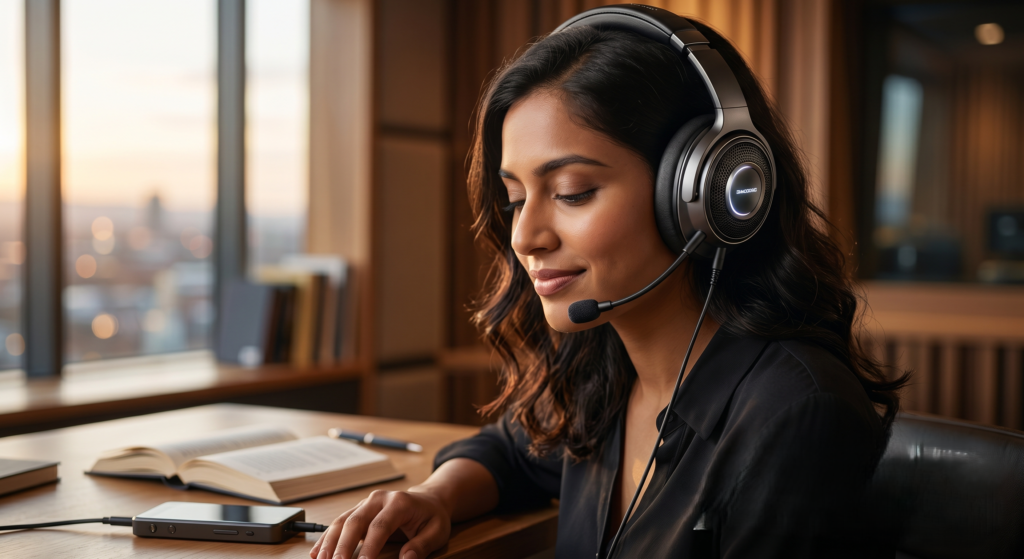
Wired vs. Wireless Headphones: Listening to epic fantasies that stretch over 20 hours demands an audio setup that maintains comfort, fidelity, and immersion. As a Senior Audio Producer and Literary Critic, I often encounter the debate over wired versus wireless audio devices. This discussion transcends mere convenience and taps deeply into listener endurance, narrative engagement, and sound quality. Which setup truly supports the marathon listening sessions required by sprawling fantasy epics? This article explores the nuances of both, combining audio production insights and literary critique to reveal the winner in this endurance test.
Evaluating Wired vs. Wireless for Long Audiobook Sessions
Comfort and Physical Fatigue: The First Barrier
Comfort is crucial during extended listening. Wired headphones traditionally have a reputation for being heavier, but they often provide a snug, stable fit. This stability is essential during long sessions to prevent frequent adjustments that disrupt immersion. On the other hand, wireless headphones offer freedom of movement, reducing the physical restrictions caused by cables. However, many wireless models prioritize portability sometimes at the cost of ergonomic excellence. For 20-hour listening marathons, this comfort trade-off demands careful consideration of weight distribution, ear cup cushioning, and clamping force.
Long listening stints can cause ear fatigue regardless of the setup. Wired models often have better passive noise isolation, which lets users maintain lower volume levels. This factor helps reduce ear strain. Wireless headphones with active noise cancellation (ANC) can match or even outperform wired passive isolation, but ANC sometimes introduces a slight pressure sensation in the ears, which becomes noticeable over time. Listener fatigue, therefore, hinges on ergonomic design as much as on the wired or wireless debate.
Another critical point is cable management. Tangled wires can break immersion and add to listener frustration, especially during restless moments. Wireless removes this frustration completely but demands battery life management. Interruptions for charging can break narrative flow, making battery endurance a key metric for wireless devices intended for epic audiobooks.
Audio Fidelity and Signal Stability: The Quality Imperative
Audio fidelity weighs heavily in audiobook listening, especially for fantasy epics with complex soundscapes and nuanced vocal performances. Wired setups typically offer better signal stability because of their direct physical connection. They support higher bitrates and lower latency, preserving every subtle vocal inflection and atmospheric effect crafted by the producer. This precision is critical for emotional impact and narrative immersion.
Wireless setups have significantly improved, especially with codecs like aptX HD and LDAC enabling near-lossless transmission. Yet, they remain susceptible to interference and signal dropouts, especially in environments dense with Wi-Fi or Bluetooth devices. Such interruptions can pull a listener out of the story, breaking emotional continuity. The choice of wireless codec, device compatibility, and environmental factors all influence whether wireless can truly match wired fidelity for 20-hour sessions.
In addition to raw fidelity, spatial audio presentation plays a pivotal role. Many wired headphones support surround sound profiles or binaural mixes natively via complex DACs (digital-to-analog converters). Wireless devices often rely on software processing that can introduce latency or artefacts. For audiobooks that use multidimensional soundscapes to heighten realism, wired setups tend to maintain more accurate spatial cues, enhancing immersion over long hours.
Battery Life and Convenience: Sustaining the Journey
Wireless headphones’ main advantage is mobility and convenience. No cables mean easier movement, less tangling, and the ability to shift positions or multitask without disruption. However, this convenience comes with the caveat of battery life. Most premium wireless headphones offer between 15 to 30 hours of playback, which is sufficient for many but borderline for 20-hour epic sessions. Listeners may need to plan charging breaks or carry power banks, introducing a logistical element absent in wired setups.
Wired headphones eliminate battery concerns, providing uninterrupted listening as long as the player has power. This advantage is especially significant in dedicated audiobook listening environments like home or studio where physical constraints are minimal. The reliability of wired connections ensures that the focus remains on the narrative, not on equipment management.
From an endurance perspective, convenience must be balanced with reliability. While wireless setups reduce physical clutter, their dependence on battery life and potential pairing issues can interrupt marathon sessions. Wired setups may feel less convenient but offer consistent, uninterrupted playback, a key factor for listeners immersed in long fantasy sagas.
Key Audio Production Factors Impacting Listener Endurance
Bitrate and Compression: Preserving Narrative Nuance
Bitrate directly influences sound clarity and detail, which are vital for sustaining interest during lengthy listens. Audiobook producers often face the challenge of balancing file size with audio fidelity. High bitrates preserve vocal clarity, subtle background textures, and atmospheric layers that enrich a fantasy world. Compression artifacts, even minor, can accumulate over hours, leading to listener fatigue.
Wired headphones generally handle high-bitrate files more reliably given their stable connection and full bandwidth. Wireless devices are often limited by Bluetooth codec constraints, which compress audio to some degree. Although advancements like LDAC allow high-bitrate streaming, real-world conditions often degrade quality. This can affect how well listeners perceive voice inflections or background effects, diminishing immersive qualities essential for emotional engagement.
The Audiobook Quality Framework I propose rates audio quality on three pillars: bitrate fidelity, spatial accuracy, and vocal texture preservation. Wired setups consistently rank higher in bitrate fidelity, allowing producers’ work on pacing, vocal fry, and atmospheric soundscapes to shine. This fidelity translates into longer listener endurance because the auditory experience remains rich and compelling.
Spatial Audio and Soundscapes: Building Immersive Worlds
Spatial audio transforms storytelling by placing listeners within the narrative environment. Properly executed, this technique enhances the perceived distance, direction, and movement of sounds, creating an enveloping experience. For epic fantasies, where settings range from bustling kingdoms to haunting forests, soundscapes add depth and realism.
Wired headphones often provide superior support for spatial audio formats, including binaural and Dolby Atmos mixes. Their direct connection allows low-latency signal transfer, maintaining precise timing cues crucial for spatial perception. Wireless headphones rely on software algorithms that can introduce slight delays or distortions, impacting the immersive effect. Over a 20-hour experience, these small discrepancies can reduce listener engagement.
Narrator pacing and sound effects placement within the soundscape also influence endurance. Wired setups better preserve these production details, allowing the narrative rhythm to flow naturally. For example, the subtle rustling of leaves or a distant battle cry, layered correctly, pull a listener deeper into the story rather than distracting or tiring them.
Vocal Fry, Pacing, and Emotional Impact: The Human Element
Narration style is the heartbeat of any audiobook. Production elements like vocal fry, pacing variations, and emotional intonation must be delivered with clarity and subtlety. These nuances intensify the listener’s connection to characters and plot, especially in complex fantasy narratives.
Wired headphones’ fidelity ensures vocal subtleties such as breathiness or tonal shifts are conveyed without distortion. This accuracy allows listeners to detect emotional undercurrents and changes in mood, which prevents monotony and listener fatigue. Wireless headphones, while improving, sometimes compress or smooth vocal details too much, dulling these essential qualities.
Pacing also matters. A clean, stable audio signal supports consistent pacing, which is crucial for maintaining narrative tension over long periods. Interruptions, dropouts, or quality shifts in wireless setups can disrupt this pacing. Thus, for audiobooks that rely heavily on emotional nuance and vocal texture, wired setups offer a listening experience more likely to sustain engagement throughout epic sagas.
Expert Listener FAQ
How does Dolby Atmos enhance epic audiobook immersion?
Dolby Atmos introduces height channels and object-based audio, creating a 3D sound environment. For epic fantasies, this spatial layering places sounds all around the listener, from overhead dragon flights to footsteps behind. This heightens realism and emotional intensity, drawing listeners deeply into the fantasy world. Wired headphones currently offer more consistent and latency-free Atmos experiences. Wireless setups may introduce timing mismatches, reducing the effect. For 20-hour listens, Atmos helps reduce listener fatigue by varying auditory stimuli and preventing monotony.
What are the ethical considerations between human narrators and AI voices?
Human narrators bring unique emotional depth, pacing intuition, and subtle vocal inflections that AI currently cannot replicate fully. AI voices offer consistency and cost advantages but risk flattening emotional nuance. Ethical concerns include AI replacing skilled narrators and the impact on storytelling authenticity. For epic fantasies, human narration remains superior for immersion and emotional connection, vital for long listening endurance.
How does Foley design affect audiobook production?
Foley adds live-recorded sound effects synchronized with narration to enhance realism. In fantasy audiobooks, Foley can simulate footsteps, sword clashes, or ambient environment sounds. Well-crafted Foley enriches soundscapes without overwhelming narration, improving listener focus and engagement. Poor Foley, however, can distract or cause fatigue. Production quality and mixing balance ensure Foley complements rather than competes with vocal storytelling.
Can Bluetooth codecs fully match wired audio fidelity?
Advanced codecs like aptX HD and LDAC approach wired fidelity by increasing bitrate and reducing latency. However, real-world factors like interference, device compatibility, and codec negotiation often degrade wireless performance. Wired connections provide stable, high-bandwidth transmission, preserving audio detail essential for narration clarity and soundscape accuracy, especially critical in long, immersive audiobooks.
How should pacing adjustments support listener endurance?
Narrators modulate pacing to mirror story tension and character emotions. Longer pauses in dialogue or descriptive passages allow listeners to process complex scenes. A consistent, fatigue-minimizing pace supports attention span across lengthy audiobooks. Audio setups that maintain signal integrity, like wired headphones, ensure pacing nuances reach the listener undistorted, maintaining engagement and reducing fatigue.
What role does vocal fry play in audiobook narration?
Vocal fry adds texture and realism to speech, enhancing characterisation and emotional depth. It mimics natural speech patterns and can express fatigue, tension, or intimacy. High-fidelity audio reproduction is necessary to render vocal fry effectively, as compression or distortion can mask these subtle cues. Wired setups better preserve vocal fry, supporting emotional immersion critical for listener retention in epic fantasy narratives.
How can soundscape complexity influence listener fatigue?
Rich soundscapes create immersive worlds but can overwhelm if too dense or poorly balanced. Layering multiple environmental sounds requires careful mixing to avoid masking narration or causing auditory overload. Balanced soundscapes, maintained in high-fidelity setups, engage listeners without causing fatigue. Wired headphones better reproduce complex mixes without artifacts, preserving clarity and listener comfort over long sessions.
Wired vs. Wireless Headphones: Are there platform-specific differences in audiobook audio performance?
Yes, platforms vary in supported audio formats, streaming quality, and compression. Some prioritize smaller file sizes, reducing fidelity, while others allow high-bitrate downloads. Wired headphones consistently render these files faithfully, while wireless performance depends on pairing quality and codec support. Listener endurance improves with platforms that provide stable, high-quality audio files combined with reliable playback hardware.