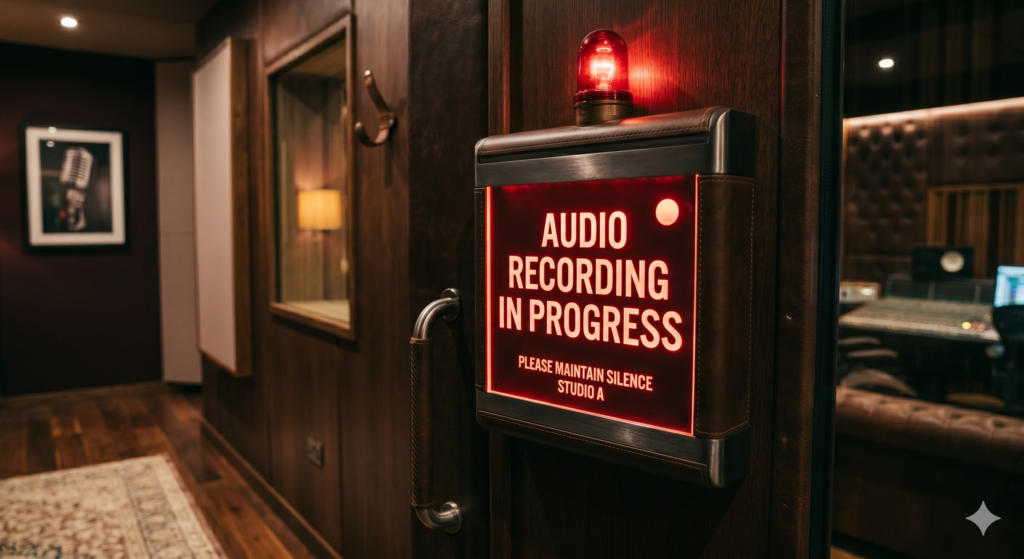

Vocal Fry vs. Clarity: Vocal fry changes the spectral tilt and perceived intimacy of a narrator’s voice, and modern production choices either accentuate or tame that texture.
Vocal fry presents as low-frequency creakiness that can read as character or as muddiness depending on context. Think of it like the grain in a photograph: sometimes it adds grit, sometimes it obscures fine detail.
Production now treats fry as an instrument to be shaped, not a flaw to be erased. Think of EQ like a set of paints: boosting low-mid is like adding ochre, cutting 250 Hz is like removing a haze.
Vocal fry interacts with intelligibility by occupying low-register energy that competes with consonant clarity. Think of consonant energy as the texture in a sculpture: if the base is too busy, small details vanish.
Producers balance fry by controlling proximity, mic choice, and processing so voiced consonants and sibilants remain crisp. Think of microphone polar patterns like the field of view in a camera: a tighter pattern isolates voice like a telephoto lens.
Narration choices now reflect platform expectations and listener patience as much as artistic intent. Think of bitrate and sample rate like resolution for an image: higher numbers capture finer nuance but require more careful handling to avoid revealing unwanted textures.
Narrators are guided to use fry intentionally as a color, not a default. Think of delivery choices as seasoning: a pinch enhances, too much overwhelms.
Production teams increasingly script moments to permit fry without sacrificing clarity, creating dynamic contrast within a chapter. Think of compression settings like the pressure in a printing press: too heavy and transient details flatten, too light and dynamics get lost.
Industry standards in 2026 expect demonstrable clarity metrics alongside subjective approval from test listeners. Think of loudness compliance like a speed limit: it keeps output predictable for distribution.
Balancing Vocal Texture and Clarity for Audiobooks
Vocal texture should serve narrative intent and listener fatigue metrics, not personal habit. Think of listener fatigue like eye strain from tiny text: prolonged grit wears the listener down.
Producers use measured A/B listening tests to decide when fry enriches character versus when it masks plosives and fricatives. Think of A/B testing like tasting two versions of a dish to pick the better balance.
Narrator coaching emphasizes placement and breath management to retain fry’s color while preserving consonant attack. Think of breath management like fueling a long-distance runner: steady supply keeps power consistent.
Fry can increase perceived authenticity in memoirs or character-driven fiction while reducing perceived professionalism in technical non-fiction. Think of genre expectations like dress code at an event: the same outfit fits some rooms and not others.
Production teams use spectral analysis to flag regions where fry harms clarity, then apply surgical processing or editorial choices. Think of spectral analysis like a magnifying glass that reveals imperfections invisible to the naked ear.
Narrative pacing and chapter length influence how much texture listeners tolerate before clarity becomes a priority. Think of pacing like meal courses: heavier flavors need balancing with palate cleansers.
Balancing occurs across the production pipeline from recording to mastering. Think of the pipeline like a relay race: each stage hands off the voice with responsibilities to protect clarity and intent.
Communication between director, narrator, and engineer is critical so that vocal texture is an intentional design choice. Think of this communication like a film director guiding an actor through multiple takes.
Final QC must consider both objective loudness and subjective intelligibility scores from representative listeners. Think of QC testing like running a car on a test track before sale.
Recording Techniques and Microphone Choices
Proximity and angle to the microphone directly influence the prominence of vocal fry and low-frequency energy. Think of proximity like standing closer to a bonfire: warmth increases but details can blur into heat.
Choice of microphone capsule and polar pattern alters how fry is captured; a large-diaphragm cardioid will warmly render low-end while a small-diaphragm will keep edges tighter. Think of mic selection like choosing a brush: a wide brush fills broad areas, a fine brush captures lines.
Room acoustics determine whether fry remains intimate or becomes boomy; dry rooms keep fry direct, lively rooms add resonance that can mask consonants. Think of room sound like the finish on wood: glossy rooms reflect and amplify, matte rooms absorb and reveal texture.
Mic preamp gain staging and analog coloration shape the audible character before any editing. Think of gain staging like the initial seasoning in cooking: it sets the foundation for later adjustments.
Use of high-pass filters at the source can control unwanted low-end rumble without killing the desirable part of fry. Think of a high-pass like a sieve that removes grit while leaving flour behind.
Pop filters and consistent mouth-to-mic distance preserve consonant transients that keep narration intelligible. Think of mouth distance like hand distance on a violin bow: subtle changes transform the tone.
Mic placement experiments should be documented with reference takes so post-production choices have context. Think of reference takes like recipe notes that allow precise replication.
Record at sufficient headroom and file fidelity to permit surgical processing later. Think of sample rate and bit depth like canvas size and color depth: larger canvases capture nuance but require more care.
Record multiple takes with staged vocal fry intensity to offer editorial choices in post. Think of multiple takes like photographing the same scene with varied exposure.
Post-Production: EQ, Compression, and Fry Control
Surgical EQ is the primary tool for shaping fry without degrading clarity. Think of EQ like a surgeon’s scalpel: precise cuts remove problem areas while preserving healthy tissue.
Compression settings control dynamic range and can either accentuate fry by breathing life into lows or suppress it by evening out texture. Think of compression like a camera stabilizer: it smooths abrupt motion but can reduce expressive movement.
Multiband compression allows different frequency bands to be treated independently so low-frequency fry can be managed separately from sibilance. Think of multiband compression like cooking with multiple pots: each pot handles a different ingredient at its ideal temperature.
Saturation and gentle harmonic enhancement can make fry sound attractive without increasing perceived muddiness. Think of saturation like a patina on metal that adds warmth.
De-essing remains essential because aggressive fry can drag energy into sibilant regions if not controlled. Think of de-essing like pruning: remove only the problematic growth, not the branch.
Automation of gain and spectral editing are preferable to heavy-handed global processing when intelligibility is at stake. Think of automation like performing dynamic lighting cues in a theater: subtle changes shape the audience’s focus.
File formats and delivery masters should preserve the processing headroom used to align with distribution standards. Think of delivery formats like shipping crates: they protect the product for transit.
Use of reference chains that mimic final platform processing reduces the chance of surprises after encoding to consumer formats. Think of reference chains like trial runs before a live performance.
Document all processing decisions in the session notes for future localization or remixing. Think of session notes like a recipe archive for reproducible results.
Technical Table: Typical Post-Production Settings
| Process | Typical Start Point | Analogy |
|---|---|---|
| High-Pass Filter | 60–100 Hz gentle slope | Like removing stage rumble with a broom |
| Subtractive EQ | 200–400 Hz cut 2–4 dB if muddy | Like removing fog from a window |
| Presence Boost | 3–6 kHz +1.5–3 dB | Like turning up a lamp to reveal texture |
| Compression | 2:1 to 4:1 ratio, 10–60 ms attack | Like a steady hand compressing clay |
| Multiband Compression | Low band threshold -6 dB | Like simmering sauces separately |
| De-esser | 4–8 kHz threshold as needed | Like removing a high, unpleasant note |
Spatial Audio, Delivery Formats, and Listener Psychology
Spatial audio introduces perceived proximity changes that can alter how fry reads to a listener. Think of spatial mixing like arranging instruments on a stage: position changes perceived intimacy.
Binaural and ambisonic formats require careful center-channel treatment so fry does not become intrusive when rendered across headphones. Think of binaural mastering like tuning a stringed instrument to a specific room.
Listeners on earbuds versus smart speakers have different thresholds for tolerating texture. Think of playback differences like tasting the same soup from different bowls.
Psychoacoustic masking explains why heavy low-end makes consonants harder to detect. Think of masking like a loud background conversation that hides a single voice.
Cognitive load theory indicates that excessive texture increases mental effort for comprehension, especially in non-fiction. Think of cognitive load like carrying extra weight up a flight of stairs.
Chapter segmentation and breath cues help the listener reset between dense textured passages to reduce fatigue. Think of segmentation like palate cleansers between courses.
Delivery format encoding can exaggerate or smooth fry depending on codec behavior. Think of codecs like window panes: some distort reflections more than others.
Maintain a high-quality master for downmixing so each consumer codec can make optimal decisions. Think of a master file like a sculptor’s original that allows quality reproductions.
Use test audiences across device types to validate that fry choices translate as intended. Think of test audiences like dress rehearsals with varied lighting.
Standards, the NARRATE Model, and Best Practices
Production standards in 2026 require both objective metrics and subjective sign-off for narration clarity. Think of standards like building codes that ensure safety and usability.
The NARRATE Model stands for Narration Acoustic Resilience, Recording, Assessment, Treatment, and Evaluation: a stepwise framework to guide decisions. Think of NARRATE like a checklist a pilot follows before takeoff.
Implementing NARRATE means measuring spectral balance, documenting mic and room choices, and making corrective processing decisions tied to readability goals. Think of these steps like a gardener planning, planting, pruning, and harvesting.
Best practices include recording clean dry takes, supplying editorial marks for texture choices, and archiving unprocessed stems. Think of archiving stems like keeping raw film reels for future remastering.
Quality control must include spectral plots, LISN clarity scores, and representative listener panels. Think of QC like lab tests that confirm physical properties beyond visual judgment.
Producers should negotiate texture allowances with publishers up front so editorial expectations align with distribution realities. Think of negotiation like agreeing on a script before the cameras roll.
Production Quality Roadmap:
- Record dry, consistent takes with documented mic distance.
- Create reference mixes and A/B samples for editorial approval.
- Apply surgical EQ and multiband dynamics to protect consonant clarity.
- Test masters across five representative playback devices.
- Archive masters, presets, and session notes for future localization.
FAQ
How does vocal fry interact with loudness normalization algorithms used by major distributors?
Normalization algorithms target integrated loudness and peak levels, and fry can skew short-term loudness causing overcompensation. Think of loudness normalization like an automatic thermostat: unexpected heat spikes trigger aggressive cooling. Manage fry by controlling low-frequency energy and using consistent dynamic control before final metering.
Can aggressive de-frying remove a narrator’s intended character without sounding clinical?
Aggressive removal can strip personality if applied across a broad band; narrow, transient-aware edits preserve intent. Think of aggressive editing like sanding wood: fine sanding smooths, heavy sanding removes grain. Use spectral repair and automation rather than blanket suppression.
What objective metrics should producers use to quantify narration clarity?
Use spectral centroid, speech transmission index variants, and consonant-to-vowel energy ratios alongside listener comprehension scores. Think of these metrics like blood pressure and temperature together revealing health. Track them per chapter to spot trends.
How should producers coach narrators to deliver controlled fry without losing intelligibility?
Coaching should focus on forward placement, slight vocal lift on consonants, and measured breath support. Think of coaching like a violin teacher improving bow control to refine tone. Record practice passes with isolated consonant exercises.
How does spatial audio change editorial decisions around fry in immersive audiobooks?
Spatial formats increase perceived intimacy, so fry may be more acceptable or exaggerated depending on scene placement. Think of spatial audio like seating a character at the front row: every nuance is visible. Plan fry intensity in relation to virtual distance and masking elements.
What are acceptable file format and headroom practices for mastering narration in 2026?
Deliver uncompressed 24-bit masters at project sample rate with -6 dBFS peak headroom and an integrated loudness aligned to distributor specs. Think of headroom like the clearance in a shipping container: enough space to prevent damage during transport.
Conclusion: Vocal Fry vs. Clarity: Why Modern Production is Changing the Way Narrators Speak
Modern audiobook production must make intentional choices about vocal fry and clarity to meet evolving listener expectations and distribution practices.
Producers must treat fry as a controllable timbral choice backed by measurable clarity metrics rather than a simply tolerated artifact. Think of this approach like tailoring clothing to fit a range of bodies: fit matters for comfort and presentation.
Adoption of the NARRATE Model and routine cross-device testing will standardize decisions and reduce last-minute surprises during localization. Think of model adoption like using a map: it helps teams reach the same destination reliably.
Forecast for the next 12 months: Expect wider adoption of standardized intelligibility metrics across publishers, growth in hybrid workflows that combine human editorial judgment with validated acoustic measures, and more genre-specific production templates that codify when fry is stylistically acceptable. Think of this forecast like seasonal planting: practices that suit the soil will flourish.