How to Deep Clean Your Earbuds: Earbuds have become an essential tool for audiobook enthusiasts, critics, and producers alike. The auditory experience depends heavily on the clarity and fidelity that these tiny devices deliver. However, regular use exposes earbuds to dust, earwax, and environmental debris, which can degrade sound quality and even damage the delicate audio drivers. Deep cleaning earbuds is necessary but must be done with precision to preserve the nuances that define immersive narration and high-fidelity storytelling. This article explores how to maintain your earbuds effectively, ensuring your sonic journey remains pristine and emotionally engaging.
Understanding the Risks: Why Deep Cleaning Earbuds Needs Care
The Fragility of Earbud Audio Drivers
Earbud audio drivers are precision components engineered to convert electrical signals into sound waves with minimal distortion. Unlike larger headphones, these drivers are compact and sensitive to physical manipulation. When cleaning, it is crucial to avoid applying excessive pressure or moisture, which can alter the driver’s diaphragm or cause corrosion. Any minor damage may result in reduced frequency response or distortion, directly impacting the clarity of narration and subtleties in vocal inflections.
Deep cleaning does more than remove surface grime; it touches areas close to the driver itself. If debris or cleaning agents penetrate the driver assembly, they can cause permanent damage. Additionally, many earbuds include acoustic ports or vents designed for spatial audio effects, which are essential for creating a realistic soundstage in audiobooks. Improper cleaning can block these vents, muffling the audio and diminishing the immersive qualities that enhance the listener’s experience.
Risks of Using Improper Cleaning Materials
Using harsh chemicals, abrasive tools, or excessive liquid during cleaning presents a genuine risk to earbuds. Many cleaning agents contain solvents that degrade rubber or plastic components. Others can seep inside the internal circuitry, leading to short circuits or corrosion. For the audio producer or critic who values the integrity of voice texture and pacing, such damage is unacceptable because it alters the authentic sound signature.
Mechanical tools, such as toothpicks or metal pins, can puncture the mesh protecting the drivers. This mesh is a critical barrier preventing dust and wax from entering the internal components. Once damaged, it becomes difficult to prevent ongoing contamination. Moreover, rough handling can misalign or loosen delicate internal parts, causing intermittent audio dropouts. Thus, understanding the risks emphasizes the need for careful, controlled cleaning methods.
The Importance of Regular Maintenance Over Sporadic Deep Cleaning
Waiting until earbuds are heavily soiled before cleaning can lead to stubborn deposits that require aggressive cleaning. Regular, gentle cleaning prevents buildup, reducing the need for deep cleaning sessions that carry greater risks. Maintaining good hardware hygiene supports sustained audio clarity, ensuring that the emotional resonance of narration remains vivid.
Furthermore, regular cleaning prevents the formation of biofilms and bacteria, which can cause ear infections or allergic reactions. These health aspects are particularly relevant for audiobook professionals who wear earbuds for extended periods during recording or editing sessions. Prioritizing routine care extends the lifespan of the equipment, preserving both sound quality and hygiene.
Essential Tools and Techniques for Safe Earbud Maintenance
Recommended Cleaning Supplies for Delicate Components
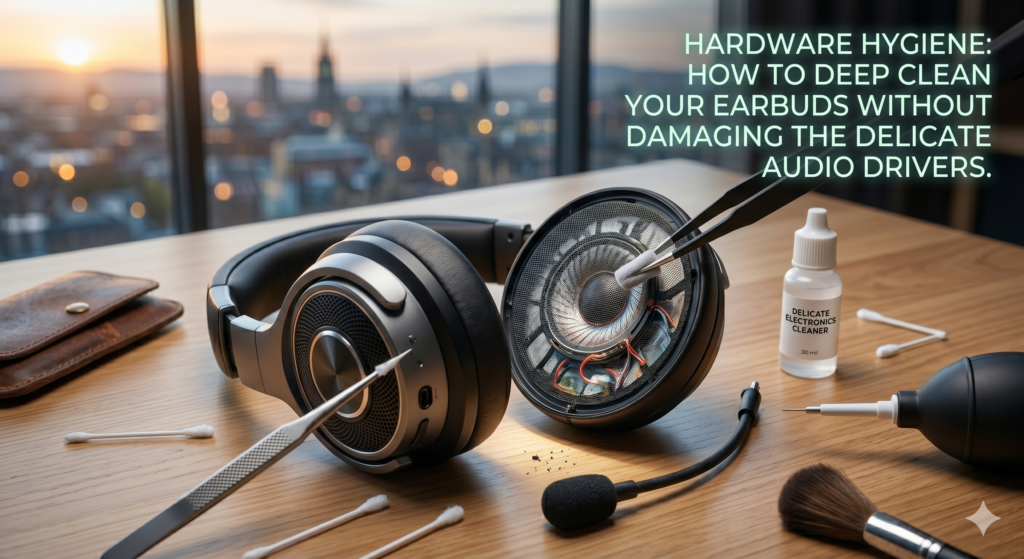
The first step in hardware hygiene is gathering the right tools. Use soft microfiber cloths to gently wipe outer surfaces. For ear tips, silicone or foam, a mild soap solution and warm water work well. Avoid submerging any part of the earbud containing electronics. Instead, use isopropyl alcohol (70% concentration) on a cotton swab to disinfect the mesh and hard-to-reach crevices without excess moisture.
When selecting tools, prioritize soft-bristled brushes designed for electronics. Anti-static brushes reduce dust without generating static charge, which can damage sensitive circuits. Compressed air cans with precision nozzles allow for dust removal in the mesh and vent areas without direct contact. Avoid using household brushes or rough cloths, as these can loosen or scratch components.
Step-by-Step Process for Deep Cleaning Earbuds
Begin by removing detachable ear tips and soak them in warm, soapy water for 10–15 minutes. Rinse and dry thoroughly before reattaching. For the main earbud body, use a dry microfiber cloth to remove loose dirt. Dampen a cotton swab with isopropyl alcohol and gently clean the mesh and any visible dirt around the speaker grill. Avoid applying liquid directly to the mesh.
Use a soft brush or compressed air to clear dust from speaker vents and seams. Periodically check the mesh for damage or clogging. If wax buildup persists, a specialized earbud cleaning tool with a scoop end can be used very gently. Always allow earbuds to dry completely before use to prevent moisture damage. This stepwise approach minimizes risks while restoring audio precision.
How to Deep Clean Your Earbuds – Preserving Acoustic Features During Cleaning
Modern earbuds often incorporate features such as spatial audio vents or specialized acoustic chambers. These features contribute to the immersive qualities that audiobook listeners cherish. When cleaning, it is vital to avoid blocking or damaging these elements. Identify vents and avoid inserting tools deeply into those areas.
Furthermore, repeated mechanical cleaning can weaken seals around acoustic chambers, altering how sound is projected. Thus, maintenance should aim for cleanliness without compromising the device’s acoustic architecture. For critical audiobook production or listening sessions, preserving these features ensures that pacing, vocal clarity, and spatial sound cues remain intact.