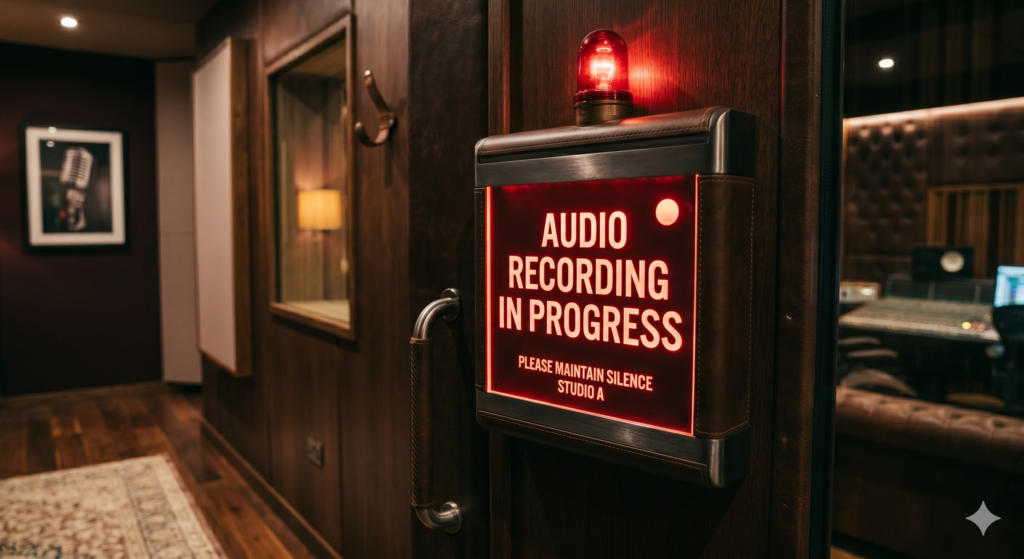

The Director’s Role: The director listens for emotional truth and judges whether a sentence lands with the intended intent. Think of pacing like a metronome for emotion: a pause stretches meaning the way silence stretches a note in music. The director adjusts tempo, enunciation, and breathing so the listener feels guided rather than lectured.
The director calibrates rhythm against the narrator’s natural speech and the book’s genre. Think of rhythm like road surface: a smooth highway suits a calm memoir, while a cobbled lane fits a thriller with staccato beats. The director chooses phrasing that supports intelligibility at streaming bitrates and noisy listening conditions.
The director shapes subtext through micro-direction on vowels, consonants, and nasal color. Think of vocal color like paint palette depth: bit depth in audio is similar, where greater depth gives smoother gradations of quiet detail. The director references standards for loudness and true peak so performance choices survive mastering intact.
The director’s role sits between actor coaching and audio engineering, translating narrative intent into a recorded performance that survives codec processing and headphone listening. The typical professional studio session in 2026 prioritizes three things: narrative clarity, spatial presence, and listener psychology. The director must therefore be part acting coach, part acoustic psychologist, and part standards custodian.
Studio Dynamics: Director, Narrator, and Engineer
The director mediates the artistic intent while the engineer secures the technical chain from mic to file. Think of the signal path like a relay race: each handoff matters, and a missed exchange adds noise. The director communicates edits and emotional targets while the engineer monitors levels and latency.
The director maintains rapport with the narrator to sustain stamina and authenticity over long takes. Think of stamina like battery life: pacing, hydration, and vocal rest extend usable performance time. The director times breaks, schedules retakes, and aligns vocal choices with the engineer’s technical constraints.
The director uses the engineer’s visual feedback to make split-second interpretive calls. Think of waveform editing like reading a score: peaks show accents, dips show breaths, and an experienced director reads these cues to ask for repositioning or reinterpretation. The director and engineer operate as a single control room unit for quality and speed.
Microphone Techniques and Spatial Presence
The director instructs mic distance and angle to sculpt proximity and presence for each scene. Think of proximity like camera framing: close mic proximity creates intimacy while distance gives room and context. The director requests movement or static placement depending on narrative demands.
The director oversees the use of room acoustics and baffles when spatial realism is required. Think of room sound like background texture in painting: too much reflects, too little flattens. The director evaluates reverb tails against scene context and may request a dry take for later processing.
The director balances performance energy with signal consistency to avoid aggressive compression during mastering. Think of compression like squeezing a sponge: excessive squeeze removes dynamics, but sensible squeeze preserves usable texture. The director asks for subtler crescendos and softer endings so automation and compression introduce minimal artifacts.
Directing Character Voices and Consistency
The director enforces character consistency across sessions and recording days to maintain listener suspension of disbelief. Think of consistency like wardrobe continuity on film sets: a changed jacket breaks the illusion. The director maintains a reference file of character tones, cadences, and pitch ranges for recalls.
The director coaches subtle differentiation to avoid caricature while keeping characters distinct. Think of vocal differentiation like color shifts in a painting: slight hue changes read as different characters, while saturated shifts read as caricature. The director asks for adjustments to timing, breath placement, and vowel quality to create believable ensemble scenes.
The director documents choices with audio bookmarks and session notes for post-production reconciliation. Think of bookmarks like margin notes in a score: they mark intent for mix, EQ, and automation. The director’s annotations reduce endless revisions by making interpretive decisions explicit and repeatable.
Technical Oversight: Levels, Formats, and Deliverables
The director enforces file technical specs that meet 2026 distributor standards: sample rate, bit depth, loudness, and file format. Think of sample rate like frame rate in cinema: higher rates capture faster detail, but file size grows. Typical audiobook deliveries remain 48 kHz 24-bit WAV for origination, with MP3 or AAC masters encoded at distributor-required bitrates.
The director verifies loudness and true peak targets to ensure consistent playback across devices. Think of loudness like perceived brightness in lighting: calibration keeps scenes from feeling too dark or glareingly bright. The 2026 industry baseline commonly targets -18 LUFS for production stems and -14 LUFS for final consumer masters, with true peaks under -1 dBTP.
The director communicates codec behavior and compression trade-offs to the team so artistic intent survives distribution encoding. Think of codec compression like packing a suitcase: you can fold smarter to save space, but overcompression wrinkles fragile items. The director uses simple test encodes to audition performance through lossy codecs and requests retakes when consonant clarity or breath articulation will be harmed.
| Technical Table: File and Delivery Specifications (2026) | Item | Recommended Value | Practical Analogy |
|---|---|---|---|
| Origination format | 48 kHz, 24-bit WAV | Like shooting in RAW for photo work | |
| Consumer master | MP3/AAC per distributor | Like exporting JPEG for web viewing | |
| Loudness (production) | -18 LUFS (stems) | Like setting stage lights to avoid both underexposure and glare | |
| Loudness (final) | -14 LUFS | Like retail audio brightness standard | |
| True Peak | < -1 dBTP | Like leaving headroom on a mixer to avoid clipping | |
| Max file length | Per-chapter as required | Like chapter divisions in a printed book |
Session Workflow: From Warm-up to Final QC
The director begins with vocal warm-ups and narrative read-throughs to establish tone and end-to-end pacing. Think of warm-ups like warming an engine: a cold start leads to rough idling. The director runs through key scenes to set benchmarks for energy and cadence.
The director manages takes with clear labeling and timecode so the editor can reconstruct the best composite. Think of takes like puzzle pieces: consistent labeling and notes are the picture on the box. The director selects preferred takes and marks alternate reads for performance variety.
The director leads a final QC pass with test encodes and simulated listening scenarios including headphones, mono Bluetooth speakers, and car playback. Think of QC testing like dress rehearsal lighting checks: a mic problem caught on a phone speaker is fixed before release. The director signs off only when narrative intent, technical specs, and listener ergonomics align.
Production Quality Roadmap
- Establish vocal benchmarks and record reference takes at session start.
- Maintain strict file naming, timecode, and take notes for editability.
- Monitor and log loudness and true peak during recording.
- Run quick lossy encodes periodically to catch perceptual artifacts.
- Finalize QC with at least three consumer playback simulations.
The NADF-1 Model: A Practical Framework for Direction
The director applies the Narrative Audio Direction Framework, NADF-1, to balance performance, space, and listener attention. Think of NADF-1 like a stage diagram: it maps where voice, silence, and ambience should live in the mix. NADF-1 defines checkpoints for tone, pacing, and intelligibility.
The director uses NADF-1 checkpoints at start, mid-session pivot, and pre-QC to prevent drift over long projects. Think of checkpoints like pit stops in racing: refueling and adjustments keep performance competitive. The director measures against NADF-1 metrics such as percentage of breath edits, average LUFS per chapter, and character voice drift scores.
The director trains narrators with NADF-1 exercises that simulate real-world listening scenarios and fatigue. Think of training like rehearsal blocks for actors: consistent practice yields reliable performances. The director documents progress with simple scorecards so the producer can forecast hours required to complete deliverables.
Frequently Asked Questions
What is the director’s role when dealing with remote recording setups and inconsistent room acoustics?
The director sets baseline technical and performance standards and requests reference files from the narrator’s space. Think of remote checks like remote site inspection: a photo and a test tone reveal much. The director instructs on mic placement, portable baffles, and matched preamp settings and uses NADF-1 to compare remote takes to studio benchmarks.
How does the director address problem frequency ranges or sibilance introduced by a narrator’s diction?
The director identifies problematic phonemes and requests specific articulation changes or placement adjustments. Think of sibilance control like adjusting window blinds: small angle changes alter the glare. The director collaborates with the engineer to apply gentle de-essing only when the performance choice cannot be altered without losing character.
What is the director’s approach to balancing narrator authenticity with distributor loudness requirements?
The director records with dynamic intent but monitors loudness in near-real time to prevent corrective overprocessing. Think of balancing authenticity with specs like cooking to taste while respecting dietary restrictions. The director requests natural dynamics and reserves loudness adjustments for mastering, not for performance compression.
How involved should the director be in post-production editing choices?
The director provides clear editorial intent, preferred takes, and scene priorities so the editor preserves dramatic arcs. Think of post-production involvement like a conductor leaving annotated scores for the orchestra. The director reviews rough cuts and provides targeted notes rather than broad rewrites.
How does the director ensure character continuity across multiple recording sessions or narrators?
The director maintains a character bible with tone references, pitch ranges, and sample clips and runs recall tests at each session start. Think of a character bible like a costume and makeup continuity sheet. The director may use spectral references and voiceprints to track consistency objectively.
What metrics should a director monitor to predict listener engagement post-release?
The director tracks intelligibility in test encodes, variance in loudness across chapters, and the frequency of retakes flagged for clarity. Think of engagement metrics like early box office numbers: they hint at audience response. The director pairs these technical metrics with test listener feedback to refine future sessions.
Conclusion: The Director’s Practical Compass
The director prioritizes narrative clarity, spatial authenticity, and technical integrity to deliver audiobooks that feel alive across devices. Think of the director like a lighthouse keeper: constant attention prevents wrecks on hidden shoals. The NADF-1 model and the Production Quality Roadmap give producers repeatable checkpoints for consistent results.
The director must adapt to evolving distribution codecs and listener habits without sacrificing performance truth. Think of future codecs like new shipping containers: they carry sound differently, so packing technique must evolve. Over the next 12 months the industry will tighten loudness normalization practices, broaden support for immersive binaural chapters, and standardize metadata for chapter-level listener analytics, raising the value of director-led QC.
The director’s craft sits at the intersection of actor coaching and technical stewardship. A skilled director shapes subtle vocal choices so that a story survives compression, small speakers, and short attention spans. Apply NADF-1, follow the Production Quality Roadmap, and you will create audiobook sessions that sound professional, emotional, and future-ready.