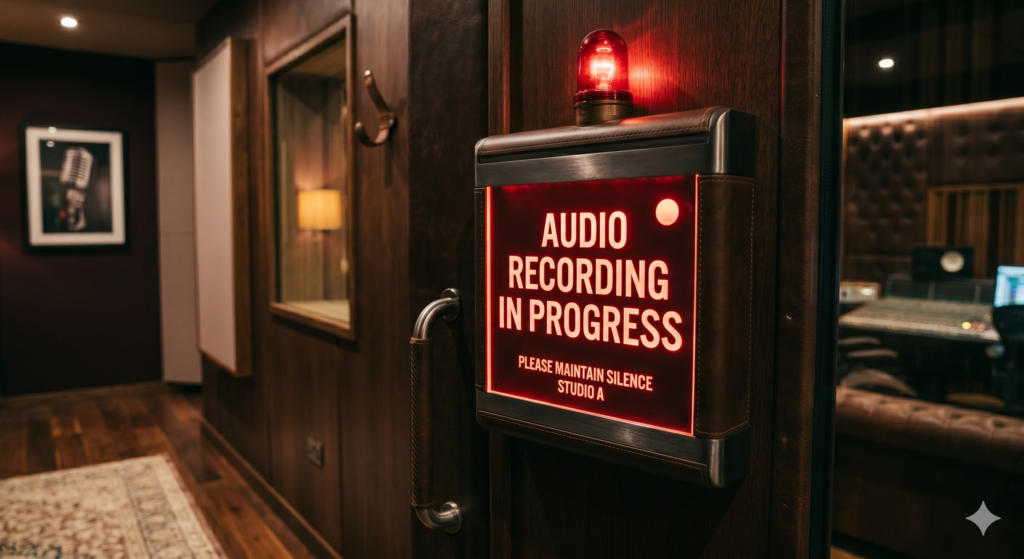

High-fidelity capture changes how a listener senses intimacy with a subject. Think of bit depth like the depth of color in a painting: 24-bit audio adds subtle shades in breath and inflection that 16-bit misses. Maintaining that microdetail in interviews reveals the human contours behind the public persona.
Consistent microphone technique reduces performance variability and preserves narrative continuity. Think of microphone proximity like standing distance from a conversation: too close and a voice feels invasive, too far and it loses warmth. Recording engineers should instruct narrators and subjects the same way a stage director blocks actors.
Controlled room acoustics preserve psychological realism during storytelling. Think of reverb like room light: a bright studio makes every edge sharp, while a dim room softens edges. Capturing interviews in a treated space keeps attention on phrasing and emotional cadence.
The True Tech Bio: Inside the Lives of the Silicon Valley Giants
Mastery of audio production reframes how biographies are heard and believed. Think of compression like packing a suitcase: good compression organizes and preserves essentials while bad compression crushes nuance. AudiobookMagic.co.uk needs a coherent production intelligence to combine performance, spatial mix, and narrative pacing.
Deliberate narrator direction defines listener trust and engagement. Think of tempo like the heartbeat of a story: too fast and the listener breathes shallowly, too slow and attention drifts. This briefing provides the operational language and technical map a senior producer would hand to a protégé.
Precise delivery standards differentiate amateur work from professional audiobooks. Think of loudness like the thermostat of a listening room: small adjustments change comfort across devices. The guidance here aligns with 2026 industry expectations for audible quality and emotional fidelity.
How Tech, Power, and Persona Shape Their Stories
Narrative framing in tech biographies benefits from layered spatial staging. Think of spatial audio like arranging actors on a stage: front-center for direct testimony, side stages for anecdotes and internal monologue. Placing the narrator correctly in a spatial mix enhances perceived authority and vulnerability.
Vocal performance must reflect both power and fallibility to be credible. Think of timbre like a facial expression: a warmer midrange suggests approachability while a controlled lower register communicates gravitas. Direct the narrator to vary timbre intentionally to match scene shifts.
Editing choices influence how listeners interpret motive and consequence. Think of editing like film cutting: a tight cut builds momentum while a longer take invites reflection. Maintain editorial transparency by preserving natural breaths and timing where emotion matters.
The Audiobook Production Intelligence Briefing
Master-level metadata and file hygiene are non negotiable for reliable distribution. Think of metadata like shipping labels: incorrect tags can misroute the product. Use clear chapter markers, role attributions, and UTC timestamps so assets remain traceable.
APM-1 defines how to translate performance into deliverables: Audiobook Presence Matrix 1.0 maps narrator dynamics, mic chain, spatial placement, and delivery targets. Think of APM-1 like a blueprint an architect hands to builders: it specifies materials, tolerances, and finish so every producer reproduces the intended presence.
Technical delivery must conform to platform tolerances while preserving a master. Think of a master file like a negative in photography: all derivatives come from it. Keep a 24-bit / 48 kHz WAV master, and prepare compressed derivatives using recommended encoder settings in the table below.
| Asset | Recommended Format | Sample Rate / Bit Depth | Target Loudness | Delivery Codec |
|---|---|---|---|---|
| Master | WAV (uncompressed) | 48 kHz / 24-bit | -18 LUFS integrated, true peak -1 dBTP | N/A |
| Streaming Deliverable | MP3 VBR 3 or 192 kbps | 44.1 kHz / 16-bit | -18 LUFS integrated, true peak -1 dBTP | MP3 LAME or AAC-LC |
| Archive | WAV (uncompressed) | 96 kHz / 24-bit optional | Preserve dynamic range | FLAC for space savings |
| Checksum | SHA-256 | N/A | N/A | Store with package |
Performance Art, Spatial Audio, and Listener Psychology
Intentional vocal gestures increase listener empathy and memory encoding. Think of prosody like punctuation in a sentence: rises and falls cue where the brain should flag significance. Train narrators to place emphasis with purpose rather than habit.
Binaural rendering can place the listener inside a scene to heighten immersion. Think of HRTF like prescription glasses for sound: it adjusts cues so depth and direction feel natural. Use measured HRTFs and avoid generic presets for scenes where presence matters.
Dynamic automation ties emotional contour to intelligibility across devices. Think of dynamic range like ocean swell: valleys give the peaks meaning. Use gentle compression with parallel chains to retain transients while keeping speech intelligible on earbuds and smart speakers.
Technical Standards and 2026 Best Practices
Mandatory master quality in 2026 is 24-bit / 48 kHz for narrative voice work. Think of sample rate like the frame rate of a film camera: a higher rate captures smoother microdetail. Platform deliverables may downsample, but masters should remain robust for future reissues.
Loudness standardization for audiobooks centers on integrated loudness of -18 LUFS with true peak below -1 dBTP. Think of LUFS like room volume setpoints: a consistent level keeps listeners from adjusting volume between chapters. Measure integrated and short-term LUFS and document readings in deliverable notes.
Codec choice and bitrate decisions must balance perceptual fidelity with distribution constraints. Think of bitrate like packaging quality: higher bitrate preserves texture, lower bitrate reduces detail. Prefer VBR modes tuned to voice for MP3 and consider AAC-LC for platforms that accept it.
Production Quality Roadmap & Implementation
Project management procedures ensure narrative continuity and consistent voice characterization. Think of cue sheets like a conductor’s score: they tell every participant when to enter and how loud to be. Log performance notes during sessions and consolidate them into a single style guide.
Five-point Production Quality Roadmap:
- Capture: Record to 24-bit / 48 kHz WAV with noise floor below -60 dBFS and peaks below -6 dBFS. Think of noise floor like the grain in photography: lower is cleaner.
- Performance Reference: Create voice style sheets per character with sample phrases and intended dynamic range. Think of this like costume notes for an actor.
- Mix: Use mid-side or binaural techniques for spatial content. Think of mid-side like adjusting stage front versus hall ambiance.
- Loudness and QC: Target -18 LUFS integrated and true peak -1 dBTP. Perform perceptual checks on earbuds, headphones, and a smart speaker.
- Delivery and Archival: Produce a verified compressed file with a checksum and retain the master in two geographically separate locations.
Post production workflows should document every decision for future re-edits. Think of session notes like a recipe: repeatable steps produce consistent results. Automate QC reports to include LUFS, dynamic range, and spectral analysis.
Implementation Checklist
- Confirm recording chain: mic, preamp, converter, and clock.
- Record a 60 second reference tone and compliance slate.
- Store WAV masters with SHA-256 checksum.
- Run automated loudness and peak analysis.
- Deliver compressed variants with metadata and chapter markers.
FAQ
How do I balance narrative intimacy with ambient realism without confusing the listener?
Intimate vocal capture requires close mic technique and selective ambient beds. Think of ambient tracks like wallpaper: subtle texture adds depth but should not compete with foreground speech. Use low-level room ambiences and automate them under speech so the voice remains primary.
What is the safest loudness target for cross-platform audiobook delivery in 2026?
Integrated loudness of -18 LUFS with true peak below -1 dBTP provides consistent playback across devices. Think of this target like a universal clothing size: it fits most listeners without adjustments.
When should binaural spatialization be used for a nonfiction biography?
Binaural spatialization should be used sparingly for scenes requiring immersive presence or reconstructed moments. Think of spatialization like a cinematic close up: use it to focus attention, not as constant seasoning.
How do I handle archival masters to remain future-proof?
Maintain a 24-bit / 48 kHz WAV master and consider a 96 kHz master for archival fidelity when budget allows. Think of archival masters like glass negatives: they preserve maximum information for later prints.
Which codecs are acceptable for major audiobook platforms as of 2026?
Most platforms accept MP3 VBR targeting 192 kbps for voice and AAC-LC where supported. Think of codecs like packaging; choose the one that preserves the product in the smallest reliable box. Validate platform requirements and supply additional formats on request.
How should rights and participant privacy be managed in recordings of public figures?
Explicit consent and recorded release forms are non negotiable, and metadata should include consent versions and redaction notes. Think of consent documentation like legal seals: they protect the production and future distribution.
Conclusion: The True Tech Bio — Sound, Story, and Strategy
Final mixes define how a listener constructs the private life behind a public face. Think of a master mix like a portrait: lighting, angle, and brush strokes determine perceived character. Prioritize vocal truth over audio polish when doubt arises.
Final production governance ensures reproducibility and accountability across iterations. Think of your production matrix like aircraft checklists: following each item reduces risk and improves safety. Preserve session notes, loudness logs, and style sheets for every release.
Final forecast: Over the next 12 months expect increased adoption of standardized loudness tooling integrated into DAWs, wider use of binaural previews for editorial approval, and tighter platform requirements around metadata and checksum verification. Think of this shift like traffic regulation changes: workflows will adapt to minimize friction and maximize compatibility.
Thank you for reading this Audiobook Production Intelligence Briefing for AudiobookMagic.co.uk. Preserve presence, prioritize narrative truth, and use technique to serve store.