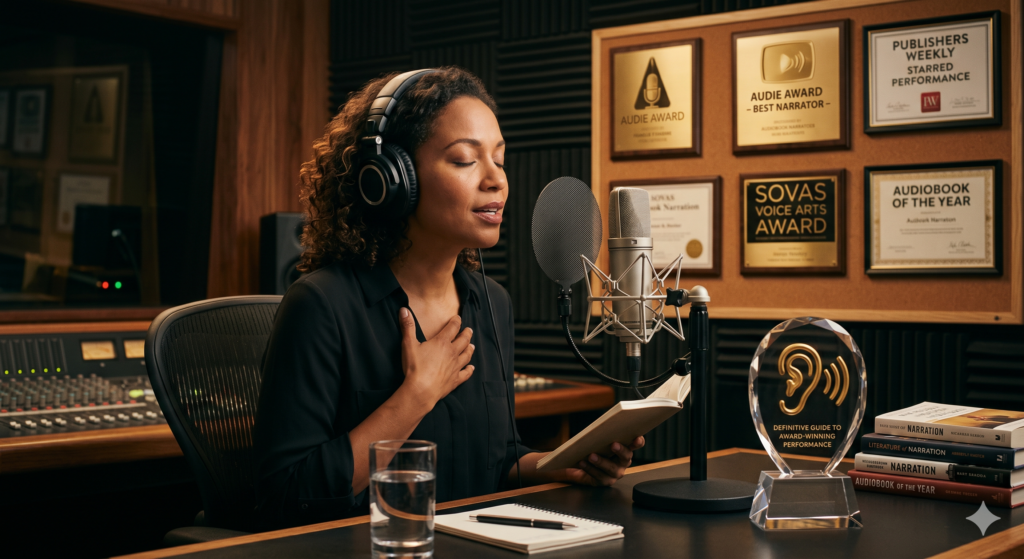

Breath Control Mastery: Silence as Pacing Tool
How Top Narrators Use Silence as a Storytelling Tool: Breath control defines the narrator’s tempo and becomes an invisible instrument for pacing a story. Imagine breath as the metronome of a scene: short breaths tighten tempo like quick drum hits, long held airs let the room breathe like a cathedral taking in light. Use that image when you decide where to hold silence; the listener times their expectation against the narrator’s inhalations.
Breath is the narrator’s metronome and this Masterclass is a production briefing for AudiobookMagic.co.uk focused on performance, spatial audio, and listener psychology.
Breath timing must be planned as deliberately as line reads because modern listeners expect cinematic clarity and emotional precision. Treat each pause as a production decision that affects attention, comprehension, and perceived realism.
Breath control shapes narrative tension and release in measurable ways. Think of pacing like camera movement: a lingering close up allows details to settle; a staccato cut propels action. Apply that same directoral mindset to when you allow silence to live in the waveform.
Silence as Rhythm
Silence functions as rhythmic punctuation rather than absence of sound. Consider a composer removing notes to highlight a motif; similarly, a breath or pause highlights a phrase. Craft pauses so they read as part of the score and not as empty space.
Training Breath Silence to Sculpt Emotional Beats
Training breath patterns must be treated like instrument practice for a singer or violinist. Regular exercises calibrated to narrative archetypes build muscle memory for emotional beats: anxiety requires clipped breaths, reconciliation benefits from long, even air. Schedule breathing drills that match your most common narration genres.
Technical breathing techniques must be measured with tools during rehearsal. Think of breath tracking like a sport coach timing sprints: use a breath meter or a simple app to quantify inhale length and recovery time. That quantification trains the narrator to place silences consistently under pressure.
The HART Model formalizes breath-to-emotion mapping for narrators. HART stands for Hold, Align, Release, Tone. Hold is the pre-pause posture; Align is matching physiological state to text; Release times the exhale with semantic resolution; Tone calibrates the voice color on release. Use HART as a rehearsal checklist before every session.
The HART Model
HART must be integrated into warmups and cold reads to be effective. Think of HART like a three-point harness in a car: it secures the narrator’s intent so movement is safe and controlled. Practise each HART element for specific emotions until it becomes reflexive.
Silence and Spatial Audio: Placing Pauses in 3D Space
Spatial audio requires treating silence as a spatial bed that anchors virtual sound sources. Silence in binaural mixes conveys proximity; the subtlest inhalation to one ear can create intimacy or unease. Consider silence like negative space in a sculpture: its shape defines the object as much as the material.
Micro-pauses and micro-movements benefit from precise panning and depth control. Think of panning as placing performers on a stage floor plan: a breath slightly to the left suggests a character leaning away. Use head-related transfer function (HRTF) considerations to ensure pauses do not pull the listener out of the narrative.
Spatial audio parameters must follow current 2026 industry standards for immersive narration. Treat sample rates and object-based routing as production design choices that determine how silence breathes inside a virtual environment.
Spatial Implementation Practices
Spatial implementation requires preset libraries and room models that preserve breath dynamics. Think of room models like different theaters; a whisper in a small room reads closer, while the same whisper in a hall becomes atmospheric. Map pauses to the intended virtual setting early in the session.
Psychoacoustics: How Listeners Perceive Pause and Tension
Psychoacoustics shows that brief silences often heighten attention more than louder crescendos. The brain treats an unexpected pause as a prediction error and focuses resources to resolve it. Use short, well-placed silences to direct cognitive effort towards critical story moments.
Emotional interpretation of silence depends on context and cultural listening habits. Compare pause perception to turning the color temperature of a light: a cool pause may feel clinical, a warm pause intimate. Calibrate pause length and timing to your target demographic and the emotional frame of the text.
Measuring listener response must be part of iterative production. Think of response metrics like a barometric reading for engagement: collect A/B test data on pause lengths and map them to retention and comprehension metrics to validate artistic choices.
Recording Techniques and Breath Management Tools
Recording technique must start with mic distance and orientation to capture breaths deliberately. Think of microphone placement as choosing the right lens for a shot: a close capsule picks up tactile breath detail, while a further distance yields a more ambient breath. Choose the lens that matches the desired narrative texture.
Breath noise can be shaped in-session with physical technique and small hardware. Think of pop filters and baffling as acoustic make-up: they control the shine without altering expression. Use low-cut filters sparingly and train the narrator to adjust mouth shape and tongue position to minimize intrusive aspirates.
Breath-tracking and cueing tools improve timing between lines. Think of a breath tracker like a conductor’s baton: it signals entrance and release. Implement visual cueing on the DAW timeline and a small in-ear cue for complex multi-character reads to synchronize silences.
Mic Technique and Performer Positioning
Mic technique must include rehearsed marks for where inhalations start and end relative to the capsule. Think of these marks like stage blocking: precise positioning reduces inconsistent proximity effects. Record a breath reference pass at the start of each session to calibrate levels.
Post-Production, Compression, and Delivery Standards
Post-production must preserve intentional silence while meeting loudness and delivery specs. Think of compression like a sculptor removing small irregularities: used gently it smooths dynamics, used aggressively it flattens expressive breath contours. Always prefer transparent compressors and manual gain riding to preserve breath character.
Delivery standards for 2026 require LUFS normalization and true-peak compliance that respect pause dynamics. Think of LUFS like the perceived brightness of a room: it balances everything so silences are audible but not disruptive. Apply -18 to -16 LUFS for immersive formats and -14 LUFS for stereo commercial platforms, while ensuring true-peak stays below platform limits.
A technical table clarifies core delivery parameters and their analogies.
| Parameter | Recommended Value | Analogy |
|---|---|---|
| Sample rate | 48 kHz (object-based) | Like frame rate: higher means smoother motion |
| Bit depth | 24-bit | Like paint depth: more range for subtle color |
| Loudness (stereo) | -14 LUFS | Like room brightness: balanced for platforms |
| Loudness (immersive) | -18 to -16 LUFS | Like soft-lit cinema for ambience |
| True-peak | < -1 dBTP | Like a crest limit: prevents distortion |
| Codec | WAV/OPUS for streaming, ADM-BWF for objects | Like choosing print quality vs web image |
Production Quality Roadmap
Start each project with these five checkpoints that guarantee breath-aware production.
- Define emotional pause map: chart where silences will function dramatically.
- Calibrate mic and room: record reference breaths for session consistency.
- Rehearse HART elements: map breath technique to key beats.
- Manual gain ride before compression: preserve expressive dynamics.
- Deliver to 2026 specs: normalize LUFS and verify true-peak and object metadata.
FAQ
What is the optimal pause length for dramatic versus informational narration?
Short answer: Optimal pause length depends on semantic weight and listener expectation.
Dramatic moments typically benefit from 400 to 800 milliseconds of silence to allow affective processing. Informational transitions often use 200 to 400 milliseconds to signal separation without cognitive loss. Measure with listening tests to confirm the genre and audience response.
How do I prevent breath noise from being perceived as a technical flaw?
Short answer: Preventative technique and selective editing reduce unwanted attention to breaths.
Use performer training, mic placement, and soft gating to minimize intrusive aspirates. Think of light diffusion when a key shadow is too harsh: shape the breath rather than remove it entirely, because natural breaths support authenticity.
When should spatial audio treatments accentuate a pause versus leave it dry?
Short answer: Accent pauses in spatial mixes when location contributes to meaning.
If a pause implies distance, sustain spatial reverb tails around it. If intimacy is the goal, keep the silence dry and close-miked. Treat spatial processing like stage lighting: selective illumination supports narrative focus.
How aggressively should I use compression on experienced narrators who control breath well?
Short answer: Use light compression and manual gain automation to retain nuance.
Aim for low ratio, slow attack, and medium release, then refine with clip-by-clip gain riding. Think of compression like seasoning: a pinch enhances, too much overwhelms.
Can algorithmic breath removal ever replace editorial decision making?
Short answer: Algorithms help but cannot replace editorial intent.
Use breath reduction tools for technical clean-up, then restore or reintroduce specific breaths that serve storytelling. Consider tools like multiband gates as surgical instruments, not as a substitute for a director’s taste.
How do I test listener response to different pause strategies at scale?
Short answer: Combine A/B streaming tests with biometric or attention metrics for robust evaluation.
Implement two versions with distinct pause maps and measure completion rates, retention, and subjective surveys. Think of it like split-testing a website: data informs artistic choices that also respect craft.
Conclusion: The Breath-Controlled Narrative
Breath-aware production elevates narration from speech to cinematic performance and must be integrated across performance, spatial design, and post-production.
Breath and silence are production elements that guide attention, shape emotion, and define realism for modern listeners. Treat pauses as compositional choices and build workflows that preserve their integrity.
Forecast: Over the next 12 months expect a heavier emphasis on hybrid metrics that combine perceptual loudness, engagement analytics, and micro-behavioral data to refine pause strategies. Expect larger publishers to standardize breath-reference passes and immersive object metadata in deliverables. Independent producers will adopt low-cost spatial toolchains and share pause-mapping presets for common genres.